Here's the thing about clitoral sensitivity
Your clitoris has more nerve endings than your fingertip. More than your lips. More than almost anywhere on your body. That's not a feature that got a memo about intensity levels. It's just wired that way, which means direct vibration can feel less like pleasure and more like your phone on max buzz while it's falling down the stairs.
Lemon vibrators change that equation entirely.
Why direct vibration can feel overwhelming
Most traditional vibrators work the same way: a motor spins or oscillates to create vibration that travels through silicone or plastic directly into the tissue you're stimulating. For some people, this feels amazing. For others, it feels too much. Too sharp. Too constant. Too one-note.
The clitoris doesn't actually want relentless jackhammering. It wants rhythm, pressure variation, and the ability to adjust intensity without feeling like you've gone from a light hum to a power drill. When someone tells me they can't use vibrators because they're "too sensitive," what they usually mean is that direct vibration overstimulates the exact nerves that are supposed to be building pleasure.
It's not that your body is broken. It's that the tool isn't matching your neurology.
How suction works differently on sensitive tissue
A lemon vibrator doesn't vibrate your clitoris directly. Instead, it creates a gentle suction that stimulates the entire clitoral complex, not just the exposed glans. This matters more than it sounds.
When you use suction, you're creating a pressure gradient that pulls blood into the tissue and stimulates the network of nerves in and around the clitoris. It's diffuse rather than pointed. You're not pressing a vibrating motor against one spot; you're creating a rhythmic pulse of pressure that engages a wider sensory map.
For people with high sensitivity, this is transformative. The sensation is intense but not sharp. Deep but not drilling. Sustainable, which is its own kind of gift. A lot of people reach orgasm faster with suction because their nervous system isn't sending up a defensive wall against overstimulation.

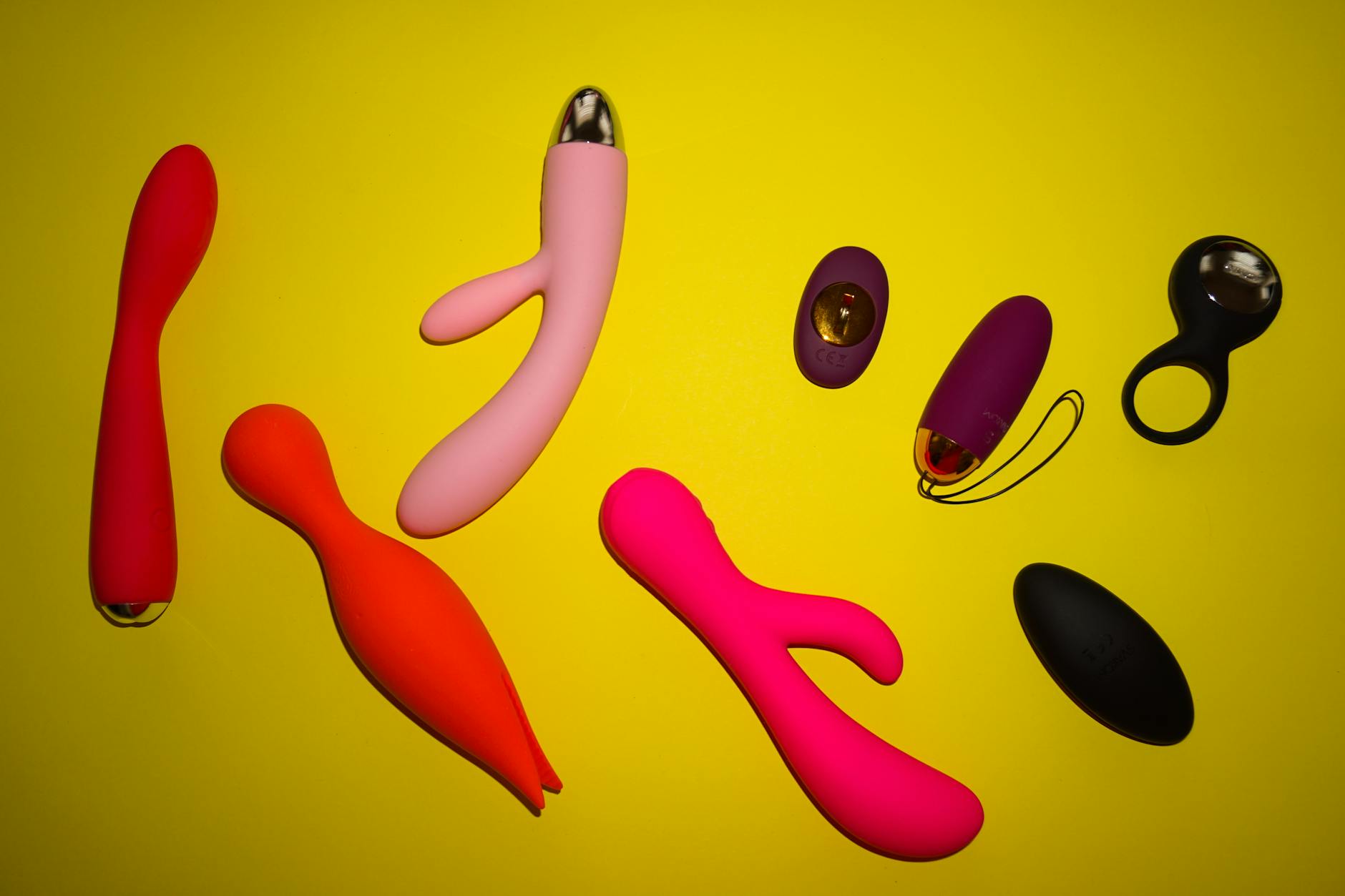
Photo by FounderTips on Pexels
The physiology of genital sensitivity
Sensitivity isn't one thing. Your clitoris has two main zones: the glans (the exposed part you can see) and the body and crura (the parts that extend internally and branch out). The glans has the highest concentration of nerve endings, which is why direct pressure there can feel intense.
When you use a suction-based lemon vibrator, you're distributing that stimulation more broadly. The suction cups design on a lemon vibrator means you're engaging both the glans and the surrounding tissue in a more balanced way. It's like the difference between poking one spot repeatedly and massaging the whole area with intentional rhythm.
This matters clinically. People who experience pain with direct stimulation, or who find traditional vibrators numbing rather than pleasurable, often find suction gives them access to pleasure they didn't know they had.
Intensity control without numbness
One sneaky problem with vibration is that it can numb the tissue it's meant to stimulate. After fifteen minutes of constant vibration at high settings, your nerves basically stop reporting what's happening. You chase the sensation by increasing intensity. Then you numb more. Then you need even more intensity. It's a treadmill.
Lemon clitoral vibrators solve this through pattern variation rather than raw power. A quality lemon suction vibrator like our Lem Clitoral Vibrator gives you multiple patterns and intensity levels, but none of them feel like "mild bees" at any setting. The sensation stays clear because suction stimulates differently than vibration.
You can use the same device consistently without the numbness penalty. That's not nothing. Pleasure that lasts and stays vivid is pleasure that's actually worth building toward.
Starting with a lemon vibrator if you're sensitive
If you've had bad experiences with vibrators, here's how to approach a lemon-style suction vibrator as a sensitive person:
Start with the lowest pattern and lowest intensity setting. Not "barely on." Actually the lowest option. Spend a few minutes there. Let your body recognize what this feels like. You're not chasing an orgasm; you're learning a new sensation.
After you get comfortable with pattern 1 at level 1, try pattern 2 at the same intensity. Different patterns feel wildly different. One might feel sharp where another feels round. Another might feel concentrated where another spreads out. The diversity is the point.
Then adjust intensity, not pattern. Go to level 2, same pattern. Note the difference. For most sensitive people, levels 2 and 3 are where the magic happens. You don't need a nuclear device.
Always use lubrication, even though suction isn't friction-based. Lube lets the cup seal better and helps the tissue respond more fully. Water-based works fine.
Why lemon vibrators feel sustainable
Sustainability matters for long-term pleasure. If every session leaves you sore or numb, you stop showing up. But people who use suction-based lemon vibrators tend to use them regularly, without discomfort, for years.
The geometry helps. A well-designed suction cup disperses pressure instead of concentrating it. The pattern variation keeps your nervous system engaged. The intensity cap means you're building pleasure through technique and attention, not through raw power.
You can actually relax into a lemon clitoral vibrator in a way that's harder to do with traditional toys. And relaxation is where the deepest orgasms live.
Common misconceptions about sensitivity
"If I'm sensitive, I should use vibrators less often." The opposite is usually true. Regular, comfortable use builds tolerance and pleasure. Avoidance teaches your body to stay guarded.
"Suction vibrators are for people who can't use regular toys." Suction-based lemon vibrators are actually preferred by a lot of people with typical sensitivity levels. It's not a workaround. It's often the better choice.
"I'm too sensitive for any vibrator." There's a threshold below which traditional vibration becomes unpleasant. But suction can often stay below that threshold while still delivering intense sensation. It's worth trying before you write off vibrators entirely.
"Using a toy with a design like a lemon vibrator is weird." Form follows function. A lemon suction vibrator is shaped that way because the engineering works. It's no weirder than any other device.
When to see a provider
If you experience pain rather than pleasure, or if numbness is extreme even with low-intensity suction, talk to a pelvic health physical therapist or gynecologist. Vulvodynia, lichen sclerosus, and other conditions can create sensitivity that needs medical attention, not just a different toy.
But if you've got standard high sensitivity and you've been avoiding vibrators because they feel too intense, a lemon vibrator like the Lem Clitoral Vibrator is genuinely worth the experiment. The design is built specifically for tissue that needs a softer touch.
Your sensitivity isn't a problem to solve. It's information. Lemon-style suction vibrators are just better listeners to that information.
FAQ
Are lemon clitoral vibrators less intense than regular vibrators?
Intensity and sensation are different things. Suction vibrators deliver intensity differently, not necessarily at lower power. Some people find them more intense because the sensation goes deeper. Others find them gentler because there's less sharp stimulation. The pattern variety matters more than peak power.
Can I use a lemon vibrator if I've had numbing problems with other toys?
Often yes. The reason vibrators numb is that constant, direct vibration fatigues the nerves. Suction works through a different mechanism and patterns vary, which means you're less likely to hit that numbing wall. Start low, go slow, and pay attention to what your body tells you.
How do I know if I'm "too sensitive" for vibrators?
If direct vibration feels sharp, burning, or painful rather than pleasurable, you might be on the high end of sensitivity. But "too sensitive for all vibrators" is rare. You might just be too sensitive for vibration specifically. Suction often reads differently to a nervous system that rejects traditional buzz.
Do I need lube with a lemon suction vibrator?
Yes. Lube helps the seal form and makes the suction feel better. It's not about friction; it's about tissue response and comfort. Water-based lube is fine and plays nicely with silicone toys.
Can I use patterns and intensity together to find my sweet spot?
Absolutely. The combination of pattern and intensity is where the learning happens. You might find that pattern 3 at level 2 is perfect, but pattern 1 at level 3 is too much. Everyone's map is different. Exploration is the whole point.
How do I know if a lemon clitoral vibrator is actually going to work for me?
There's no way to know without trying. But if you've had bad experiences with traditional vibrators and you're reading this thinking "maybe," that curiosity is worth following. The worst outcome is you learn more about what doesn't work. The best outcome is you find a tool that gives you access to pleasure you've been missing.
The sensitivity conversation you need to have
If you're in a relationship, talk to your partner about trying a lemon vibrator together. Explain that you're not abandoning previous toys or experiences. You're experimenting with a different approach because your body might respond better to it. You might find it opens conversations about pleasure that you've been skirting.
For more on how to integrate toys into partnered sex, check out our guide on using a lemon vibrator with your partner.
If you're solo, think about this as an investment in yourself. You deserve pleasure that feels good, not pleasure that feels like work. Read more about how lemon clitoral vibrators compare to traditional toys to understand the full range of what's available.
Sensitivity is just your body's way of paying close attention. A lemon vibrator is just a tool designed to listen closely too. When they meet, something clicks.