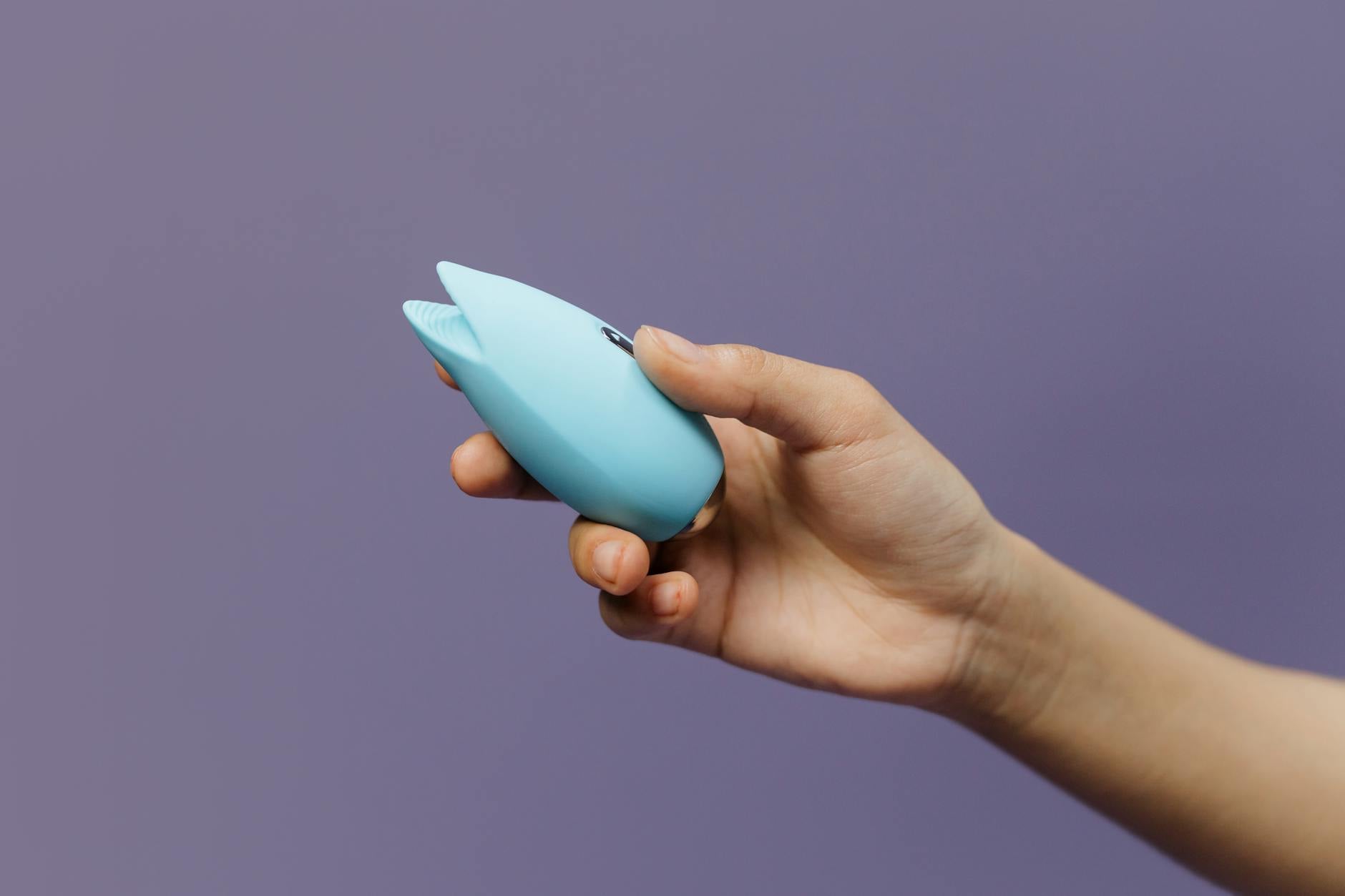
How Lemon Vibrators Compare to Traditional Vibrators
Let's be honest: if you've been using the same style of vibrator for years and it's stopped feeling like anything special, that's not because your body is broken. It's probably because you've been using the same pattern your nerves have learned to tune out.
That's where the difference between lemon vibrators and traditional vibrators actually matters. They're not better or worse. They're different. And different is often exactly what your nervous system has been waiting for.
The fundamental difference: suction versus vibration
Here's the thing most people don't realize when comparing lemon clitoral vibrators to traditional vibrators. A traditional vibrator moves back and forth really fast, usually between 3,000 and 10,000 times per minute. Your clitoral tissue responds to that rapid movement, and if you use it consistently, your nerves get very good at recognizing that specific pattern.
A lemon vibrator works differently. Instead of vibrating, it uses rhythmic suction. It gently pulls on the sensitive tissue around the clitoris, which stimulates a different network of nerve endings. You're not creating repetitive motion. You're creating a pulsing sensation that mimics oral sex more closely than any vibrating toy can.
This is the key reason people who've been using traditional vibrators for a long time often feel like something has shifted when they switch to a suction-based toy.
Why sensation adaptation is real
Your body is incredibly smart. If you use the same vibration pattern for months or years, your clitoral nerves eventually stop responding the way they did at first. This isn't failure. It's adaptation. Your nervous system is literally learning to filter out repetitive stimulation so you can notice novel threats or changes in your environment. It's a survival mechanism that works against pleasure.
Traditional vibrators handle this in a few ways. You can switch intensity settings. You can change the vibration pattern. But you're still fundamentally asking your nerves to respond to fast, repetitive back-and-forth movement.
Lemon vibrators sidestep this problem entirely because they operate on a completely different mechanical principle. Even if you've used suction toys before, the specific pattern and intensity of a lemon device feels genuinely different to most people.
Intensity: which actually goes deeper
Here's where people usually get confused. Traditional vibrators feel more intense to most people on first use. They create more obvious stimulation right at the surface of the tissue. You feel them working immediately.
Lemon sexual toys feel gentler at first. But that gentleness is deceptive. The suction doesn't just affect the external tissue. It pulls on the entire clitoral body, which extends up to three inches internally. For many people, this creates a deeper, more diffuse sensation that builds differently than the sharp, localized intensity of vibration.
Neither is objectively more intense. They're intense in different places. This matters for your experience because the part of your clitoris that responds best to suction is often the part traditional vibrators barely touch.
The sensation spectrum
Think of it this way. Traditional vibrators live on the "sharp stimulation" end of the spectrum. They buzz. They're direct. They work for many people and fail for others depending on nerve sensitivity and anatomy.
Lemon clitoral vibrators sit in the middle. They create a pulling, rhythmic sensation that feels closer to oral sex, but it's still not quite that. It's its own distinct sensation, which is exactly why people who've tried everything else suddenly find success with them.
This is also why you can't evaluate a lemon vibrator the way you evaluate a traditional vibrator. You can't assume that higher power settings are better. The best settings are the ones that let you feel the suction action fully without overwhelming the tissue.
Who actually benefits from switching
If you're happy with your current vibrator, you don't need to change. But if any of these describe you, a suction toy is worth trying.
First: you've been using the same vibrator for years and it barely does anything anymore. Sensation adaptation is the culprit, and suction's a clean reset.
Second: you've never been able to orgasm with traditional vibrators, no matter the intensity or pattern. You might be someone whose nervous system responds better to suction's pulling sensation than to vibratory movement. This is surprisingly common and often goes undiagnosed.
Third: traditional vibrators hurt or feel irritating against your clitoris. If the buzzing sensation creates numbness or discomfort, suction's gentler pull might solve it. This is especially true for people with sensitive vulvas or those dealing with conditions like clitoral sensitivity issues.
Fourth: you want something that mimics the sensation of oral sex more closely. Suction toys are the closest non-human equivalent. Traditional vibrators are actually quite different in how they feel.
Fifth: you're bored. Trying a completely different mechanism is the easiest way to reset your baseline pleasure and rediscover sensation you thought you'd lost.
The practical considerations
Traditional vibrators tend to be simpler. They have fewer moving parts, which usually means fewer things that can go wrong. They're also more universally compatible with different bodies and vulva shapes.
Lemon vibrators require the right suction seal to work, which means they're more finicky about placement and positioning. If you're someone with a larger clitoris, a smaller clitoral hood, or significant variation in your vulva anatomy, a lemon vibrator might not seal properly. This doesn't mean it won't work for you. It means you might need to experiment more with positioning.
Both types need lubricant, but here's the difference: traditional vibrators work fine with or without lube, whereas lemon vibrators actually need some moisture or lubricant to create the seal that makes suction possible. If you're naturally very lubricated, great. If not, you'll want a water-based lube on hand.
For cleaning and maintenance, lemon clitoral vibrators are often simpler because they have fewer parts. Traditional vibrators with complex pattern settings sometimes have more places for debris to hide. Both should be cleaned after use with warm water and mild soap.
The cost factor
You'll usually pay a bit more for a quality lemon vibrator than for a basic traditional vibrator. But comparing high-quality to high-quality, the price difference isn't dramatic. You're paying for the specialized motor and the engineering required to create consistent suction, which is more complex than simple vibration.
If you're testing the suction concept for the first time, there's no need to spend on a premium lemon toy immediately. But be aware that very cheap suction toys sometimes don't create enough suction to feel like much of anything. You get what you pay for in this space.
The verdict for your body
Traditional vibrators work beautifully for many people and will never stop being a legitimate choice. But if you've been using one for a long time and the magic has faded, or if traditional vibrators have never worked for your body, a lemon vibrator is worth the experiment.
The switch isn't about one being objectively better. It's about finding the mechanism your specific nervous system responds to. Many people find that rotating between both types gives them the best of both worlds: novelty and pleasure that doesn't plateau.
Your pleasure isn't one-dimensional. It deserves more than one tool. Start with understanding how your body actually works, then choose based on what that teaches you.
Frequently asked questions
How do I know if a lemon vibrator will work for my body type?
Lemon vibrators work best when they can create an effective seal around the clitoris. If you have a larger clitoral body or smaller clitoral hood, you might need to experiment with positioning or consider brands that offer different sizes. The best way to know is to try one, and our return policy makes that risk-free.
Can I use a lemon vibrator if I've never had an orgasm with a vibrator?
Absolutely. In fact, many people who struggle to orgasm with traditional vibrators have their first vibrator-assisted orgasm with a suction toy. Your nervous system might simply respond better to the pulling sensation than to vibration. This is common and nothing to feel broken about.
Do lemon vibrators work if I'm on medication that affects sensation?
Sensation changes from medication are real, but they affect both traditional vibrators and suction toys. That said, because lemon vibrators stimulate nerves differently, you might find that one mechanism still works when the other doesn't. Worth testing if you're dealing with medication side effects.
How long does it take to feel results when switching from a traditional vibrator?
Most people feel the difference immediately. You'll know within the first use whether suction resonates with your body. But finding the right intensity setting and positioning might take a few tries. Give yourself at least three sessions before deciding whether it's right for you.
Can I switch between lemon vibrators and traditional vibrators?
Yes, and many people do exactly this. Using both types helps prevent sensation adaptation because your nerves stay engaged with two different mechanisms. Rotating between them is actually a smart strategy if you're dealing with any numbing or plateau effect.
What if I try a lemon vibrator and it doesn't work for me?
Not every body responds to every toy, and that's completely normal. The good news is that if suction doesn't click for you, you've learned something valuable about your pleasure map. That information is useful whether you return to traditional vibrators or try something else entirely.
For more on how different toys work with different bodies, read our guide to why lemon vibrators work better for sensitive skin. If you're just starting out, our complete guide to lemon vibrators covers everything from safety to sensation.
Your pleasure deserves curiosity, not judgment. Try what calls to you.
References
- Komisaruk, B. R., Beyer-Flores, C., & Whipple, B. (2006). The science of orgasm. Johns Hopkins University Press.
- Meston, C. M., & Frohlich, P. F. (2000). The neurobiology of sexual function. Archives of General Psychiatry, 57(11), 1012-1030.
- Masters, W. H., & Johnson, V. E. (1966). Human sexual response. Little, Brown and Company.
- Taormina, D. P. (2014). Genital desensitization in women using vibration: implications for sexual dysfunction. Journal of Sex & Marital Therapy, 40(1), 15-27.