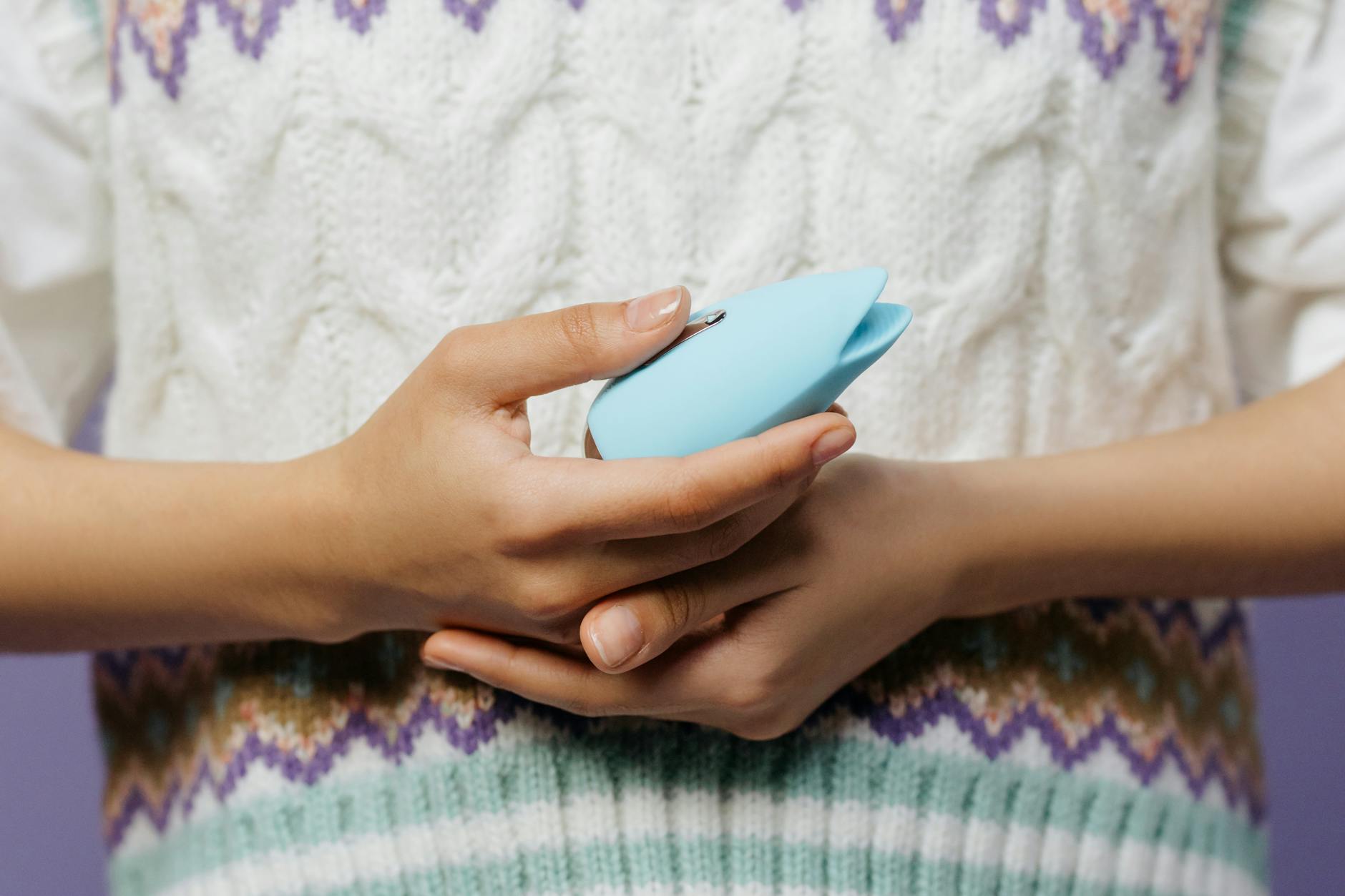
Let's start with what nobody tells you
Touch doesn't feel the same to everyone, and it certainly doesn't feel the same all the time. For some people, direct contact on sensitive skin triggers pain, panic, or overwhelming sensations that short-circuit pleasure before it even starts. This isn't fragility. This is your nervous system doing exactly what it's been trained to do.
If you're here because direct clitoral stimulation feels painful, overwhelming, or triggering, you're not broken. You're navigating a real neurological reality. And there's a specific tool that changes everything: lemon clitoral vibrators designed around suction and air pulse, not pressure.
Why pressure-based touch can feel unbearable
There are three main reasons direct touch might hurt or feel intolerable.
First, nerve sensitivity can spike after trauma, chronic stress, or anxiety. Your amygdala is essentially running security, interpreting light contact as threat. Pressure-based toys make this worse because they demand tolerance of sustained, direct contact. Your body has to sit through the sensation while your nervous system screams.
Second, sensory processing differences (common in autism, ADHD, and PTSD) mean your brain amplifies sensation. What feels pleasurable to someone else registers as overwhelming to you. It's not less, it's different. And different needs different tools.
Third, past painful experiences (medical trauma, abusive relationships, childbirth complications) can make the clitoris feel like a no-go zone. Your body learned to protect itself. That protection is valid. It also doesn't have to be permanent if you approach it on your own terms.
How lemon vibrators work differently
Most clitoral vibrators rely on vibration alone: they buzz directly against tissue. Lemon suction devices work through a completely different mechanism. They create gentle air pulses that stimulate nerve endings without sustained pressure or friction.
Think of it this way. Vibration is constant, direct contact. Suction is rhythmic, surrounding stimulation. For someone whose nervous system is in protection mode, that difference is transformative. You get sensation that feels distant, gentle, and contained. No pressure bearing down on sensitive tissue. No expectation that you'll tolerate direct contact.
This also means lemon vibrators can work well if you have vulvodynia, lichen sclerosus, or any condition where direct pressure causes pain. The suction method avoids the mechanism that triggers pain in the first place.
Starting when everything feels scary
If touch currently feels unsafe, the worst thing you can do is jump straight to a toy. You need to rebuild the pathway from "touch equals threat" to "touch can be okay." Lemon vibrators are the tool, but you're the director.
Start with the toy fully clothed. Yes, really. Turn it on. Hold it near your thigh, your stomach, anywhere that isn't the clitoris yet. Let your nervous system register: this is vibration. This is not pain. This is not mandatory.
Do this for three to five days if you need to. You're not being cautious. You're reprogramming your threat response. Each exposure where nothing bad happens is a data point your amygdala files under "safe."
Then move closer. Hover it over your underwear. No contact, just proximity. Again, days if needed. Then on top of your underwear. Then, when that stops feeling scary, on bare skin but nowhere sensitive. Your inner thigh. The back of your hand. Your breast.
This might sound slow. It is. It's also the only way to move through sensory overwhelm without retraumatizing yourself in the process.
When you're ready for the clitoris itself
Once the tool itself feels neutral or even slightly good, you can approach the clitoris. But approach matters.
Keep your clothes on. Keep your expectations low. Think of this as accidental pleasure, not goal-oriented sex. You're not trying to orgasm. You're trying to expand what's possible.
Start with the toy on the lowest setting. Hold it away from your body, not touching. Gradually move it closer until it's hovering just above your underwear. Many people find that the sensation is pleasurable from a distance because there's zero pressure.
If you're ready for contact, try placing it over your underwear rather than directly on skin. The fabric creates a buffer that can make all the difference. One partner I worked with kept her full underwear on for six months. That was exactly right for her timeline.
If pain or panic appears, stop. No shame. You haven't failed. You've just collected new information. Give yourself a few days, then try again. This isn't linear. It's iterative.
The partnership conversation (if there is one)
If you're in a relationship, your partner needs to understand that this is about your nervous system and safety, not about them or your desire for them. Many partners misinterpret sensory overwhelm as a rejection of sex itself or of them specifically.
Here's what helps: separate the two conversations. "My body is processing sensation differently right now" is not the same as "I don't want to be close to you." Say that plainly. Many couples benefit from using the lemon vibrator together, with you in full control of speed, pressure, and proximity. That control itself is often what makes sensation feel safe again.
You might also say: "I want to rebuild this slowly, and I need you to be patient with the pace." Patience from a partner isn't optional when you're healing. It's foundational.
Tools that help alongside the vibrator
Lemon vibrators aren't magic, but they're most effective when paired with a few other strategies.
Breath work changes your nervous system state faster than anything else. Before and during any exploration, try box breathing: inhale for four, hold for four, exhale for four, hold for four. This signals safety to your amygdala.
Grounding techniques help if you dissociate or panic. Feel your feet on the floor. Name five things you can see. This pulls you back to the present moment where you're actually safe.
Lubricant, even on top of underwear, reduces friction and the micro-sensations that can feel unbearable. A silicone-based lube feels smoother and lasts longer than water-based.
Privacy and time matter. You can't rebuild a sense of safety while rushing or worrying you'll be interrupted. Block out an hour. Lock the door. Tell anyone you live with that you need uninterrupted time.
When to seek additional support
If touch sensitivity is tied to trauma, a therapist trained in somatic experiencing or EMDR can accelerate the healing process significantly. A sex therapist can also help you distinguish between what's protective and what's preventing you from having pleasure you actually want.
If pain is present (vulvodynia, endometriosis, pelvic floor dysfunction), a pelvic floor physical therapist should be in the conversation. Sometimes pain that feels like overwhelming sensation is actually a physical issue that responds well to specific treatment.
Neither of these means you're broken. It means you have additional tools available. Use them.
The timeline is yours
Honestly, there's no normal pace for this work. Some people move from overwhelming touch to pleasure in weeks. Others take months or years. Both are fine. Both show up the same way: patience with yourself, consistent small steps, and willingness to explore on your own terms.
Lemon clitoral vibrators are particularly good for this because they give you gentle sensation without the pressure that retraumatizes. You're not white-knuckling through unbearable direct contact hoping to eventually like it. You're experiencing sensation that's actually designed to feel manageable from the start.
Your pleasure is worth protecting while you rebuild it. Use these tools exactly as they fit your nervous system. Nothing faster. Nothing more intense than you're ready for. If you want to talk through your specific situation, reach out to us. We're here.
FAQ
Can I use a lemon vibrator if all touch currently feels painful?
Yes, but start with it fully clothed and away from your body. The tool itself becomes the first step of nervous system recalibration. You're not jumping straight to clitoral contact. You're building tolerance of the sensation in a low-stakes way first.
How long does it take before touch stops feeling overwhelming?
It depends on why touch feels overwhelming. If it's acute stress or recent overwhelm, weeks to a few months. If it's tied to trauma, pelvic floor dysfunction, or chronic sensory processing differences, it might take longer. Consistency matters more than speed. Daily five-minute explorations beat sporadic intense sessions.
Are lemon suction vibrators actually less intense than regular vibrators?
They're differently intense. Suction distributes sensation over a wider area rather than concentrating it at one point. Many people find this gentler, but "gentler" doesn't mean "boring." The sensation is just less concentrated, which often makes it feel more tolerable for sensitive systems.
What if I'm still panicking even with gentle introduction?
Stop and give yourself several days. Panic means your nervous system isn't ready yet, and pushing past panic usually makes things worse. When you try again, dial back even further. If panic persists across multiple attempts, professional support from a trauma-informed therapist or sex therapist can help identify what your nervous system is protecting you from.
Can my partner help me through this?
Absolutely, but their role is supportive, not leading. You control the pace, the intensity, and the decision to stop. A partner who wants to "help you get over" this thing will inadvertently retraumatize you. A partner who wants to "support your pace" understands that your autonomy is the healing mechanism.
Is it normal to feel ashamed about needing this much gentleness?
Completely normal. Our culture tells us that pleasure should be easy and automatic. When it isn't, shame rushes in. Here's what's true instead: needing gentleness is not weakness. It's information about your nervous system and your needs. The people who rebuild pleasure fastest are the ones who meet themselves exactly where they are, without judgment. That's you.