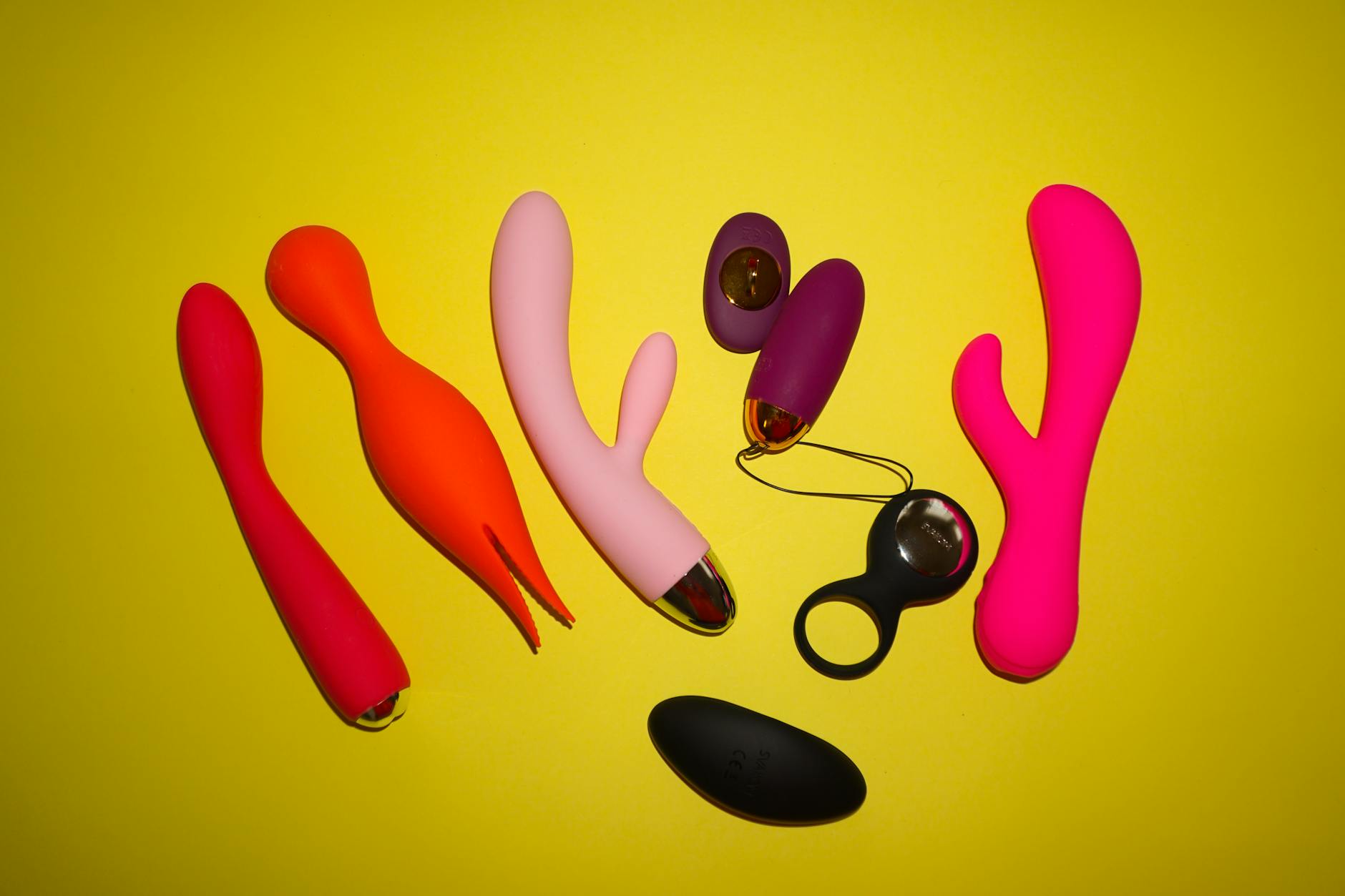
How to Use Lemon Vibrators When Anxiety Meds Dull Sensation
Let's be real: anxiety medication saves lives. It pulls you out of the spiral, steadies your nervous system, gives you room to breathe. And then, somewhere around week three, you notice that sex feels like you're experiencing it through a pane of glass. Distant. Muted. Like the volume got turned way down on something that used to feel good.
You're not broken. Your medication isn't punishing you. This is a known pharmacological trade-off, and it's wildly common. The good news? Lemon clitoral vibrators are specifically designed to cut through that sensation gap.
What antianxiety meds actually do to pleasure
Most SSRIs and SNRIs (selective serotonin reuptake inhibitors and serotonin-norepinephrine reuptake inhibitors) work by increasing available serotonin in your brain. That neurotransmitter calms the anxiety loop beautifully. But serotonin is also involved in the arousal cascade. When it's rebalanced for your mental health, sometimes the pleasure signal gets dampened in the process.
This isn't about willpower or desire. Your brain still wants pleasure. Your body's nervous system is just getting a slower message about it. Stimulation that used to register as "wow" now reads as "okay, sure." Orgasm becomes harder to reach. Some people report that sex feels numb entirely.
The technical term is medication-induced sexual dysfunction, or MISD. It happens in about 40-60% of people on SSRIs, depending on the drug and the dose. That makes it far more common than loneliness or shame around it would suggest.
Why lemon vibrators solve this specific problem
Lemon clitoral vibrators, particularly suction-based designs like the Lem, work by bypassing the traditional arousal pathway and hitting nerve clusters directly. Think of it this way: if your anxiety med is turning down the volume on sensation signals, a lemon vibrator isn't just turning up the volume. It's using a different speaker system entirely.
The suction mechanism creates micro-waves of pressure against the clitoris, stimulating thousands of nerve endings without relying on the delayed-response arousal system that medication slows down. You don't have to wait for your body to "warm up" into responsiveness. The stimulation creates its own momentum.
For people on antianxiety meds, this means pleasure becomes accessible again, not through willpower or longer foreplay, but through a tool that works with your neurology instead of against it.
The timing question: when to use your lemon vibrator during medication cycles
Here's what most people don't know: your medication levels fluctuate throughout the day, and so does the sensation dampening effect.
Most SSRIs are taken once daily, either morning or evening depending on the formulation. Peak levels in your bloodstream happen about 4-6 hours after you take the dose. If you take your anxiety med at 8 a.m., the strongest suppression happens around noon to early afternoon. By evening, levels drop slightly. By the next morning, they're lower still.
This doesn't mean waiting until your med wears off. That's impractical and defeats the purpose of taking it. Instead, it means timing pleasure around the daily curve. If you take your medication in the morning, early evening (around 6-8 p.m.) will feel noticeably more responsive than late afternoon. If you take it at night, morning sex tends to feel sharper.
Start paying attention to your own rhythm. You might notice that 18-20 hours after your dose, sensation feels fractionally more available. That's your window. Plan solo pleasure or partnered sex during that window when you can.
How to use a lemon clitoral vibrator when sensation is flat
When antianxiety meds have dulled sensation, the old playbook doesn't work. Here's what does.
Start at a higher intensity than you might expect. If you normally use a vibrator at setting 2 or 3, you might need to start at 4 or 5. This isn't your libido tanking. This is accurate calibration for your current nervous system state. The lemon vibrator's suction-wave design means you're not grinding tissue, so higher intensity doesn't equal pain. It equals accessibility.
Extend warm-up time. You're not broken if your body takes 20-30 minutes to even register arousal. Give it that time. Use the lemon vibrator for 10-15 minutes of direct stimulation before you expect to feel much of anything. This builds cumulative sensation. Orgasm, when it comes, often feels like it arrives rather than builds. That's normal for medicated bodies.
Focus on the external clitoris only. When sensation is muted, internal stimulation often feels like nothing at all. The clitoral head has the highest concentration of nerve endings (roughly 8,000 of them in a pencil-eraser-sized area). A lemon clitoral vibrator targets exactly that zone. Leave penetration for another time.
Use lube. Water-based lubricant isn't just for comfort. It enhances suction and creates better contact between the vibrator and your skin, which means more sensation reaches your nervous system. Even if you're lubricating naturally, add lube anyway. The additional layer of slip amplifies the signal.
Try patterns, not just constant vibration. The lem vibrator offers multiple pulsing patterns in addition to steady vibration. Patterns create a rhythm that your nervous system can build on. Steady vibration can feel monotonous when sensation is already flat. Patterns feel like something's happening, even when the overall intensity is modest.
What to do if a lemon vibrator still doesn't feel like much
Sometimes even the right tool hitting the right place doesn't unlock sensation if your medication is particularly strong or if your particular body chemistry is especially affected.
Talk to your prescribing provider. This is a real conversation to have, not something to be embarrassed about. Your doctor might suggest adjusting timing (taking the dose at night instead of morning, for instance), adjusting the dose itself, or trying a different medication in the same class. SSRIs vary dramatically in their sexual side effects. Sertraline tends to be rougher on desire than paroxetine, for example. Sometimes a small switch makes a huge difference.
If medication change isn't possible or practical, a combination approach works better. That means using a lemon clitoral vibrator plus extending foreplay time plus sometimes working with a sex therapist who specializes in medication-related sexual dysfunction. You're not trying to force your body back to pre-medication responsiveness. You're building a new sexual reality that works with your current neurochemistry.
The mental piece that makes the physical part work
Here's what happens in most people's heads when medication dulls pleasure: they think something's broken, or wrong with them, or that sex is just off the table now. Then sex becomes something to avoid or endure. Avoiding it makes the dulling worse, because arousal requires some level of mental engagement.
Using a lemon vibrator is partly about the tool, but it's also permission. Permission to recalibrate your expectations. Permission to use a direct approach instead of trying to access pleasure through a system that's been temporarily rewired. Permission to stop white-knuckling it and try something different.
Talk with your partner (if you have one) about what's happening. "My medication is adjusting my nervous system and sex feels quieter right now. Let's try something new" is so much clearer than suffering through mediocre sex or avoiding it entirely. Partners usually respond well to clarity and a concrete plan.
If you're solo, reframe this as an experiment. You're not trying to get back to how things were. You're learning how pleasure works on your current settings. That curiosity transforms the experience from "why isn't this working" to "let me figure this out."
When sensation returns (and it usually does)
Here's the hopeful part: most people's sensation does normalize over time, even while staying on the medication. Your nervous system adapts. The dulling effect often peaks at 4-8 weeks and then gradually softens. Some people regain most of their responsiveness by month three or four. Others find their new baseline stays slightly muted but still pleasurable.
Keep using your lemon vibrator as you adapt. What feels necessary at week three might feel like preference by week twelve. The lem vibrator will still work beautifully, but you might notice you don't need the highest setting anymore. That's your body recalibrating.
FAQ: Lemon Vibrators and Antianxiety Medication
Can I use a lemon clitoral vibrator while on SSRIs?
Absolutely. If anything, a lemon vibrator helps you access pleasure when SSRIs flatten sensation. The suction mechanism creates direct stimulation that bypasses the delayed-arousal response that medication slows down. Start with higher intensity settings and be patient with timing.
How long does it take for an SSRI to stop affecting sensation?
It varies widely. Some people adapt within 3-4 weeks. Others take 8-12 weeks to notice improvement. A small percentage remain dulled longer. If sensation hasn't improved by month three, talk to your provider about adjusting the dose, timing, or trying a different medication.
Should I take my anxiety medication at a different time to help with sensation?
It's worth asking your provider about. Some people find taking their SSRI at night instead of morning gives them more responsive hours during the day. Others notice the opposite. Your prescriber can advise whether a timing shift is safe for your specific medication.
Can a lemon vibrator cause numbness or make the problem worse?
No. A high-quality lemon clitoral vibrator won't damage nerve endings or increase numbness. If you experience pain or increased numbness with any vibrator, stop using it and check in with a healthcare provider.
Is medication-induced sexual dysfunction permanent?
Not usually. Most people regain sensation when the body adapts to the medication, when the dose is adjusted, or when medication is changed. If you've been on the same SSRI for 6+ months and sensation is still completely flat, that's worth revisiting with your prescriber.
Do I need to use a lemon vibrator every time I have sex?
Not necessarily. Some people use it during self-pleasure until sensation returns, then shift back to partnered sex alone. Others integrate a lemon clitoral vibrator into their partnered routine permanently because they prefer the intensity. There's no "should" here. Use it as much as it feels good.
The real thing
Antianxiety medication and pleasure aren't mutually exclusive. Your medication is protecting your mental health, which is foundational to long-term sexual wellness. A lemon vibrator isn't a band-aid. It's a tool that helps you access pleasure while your body adapts to chemical changes. That's not settling. That's meeting yourself where you actually are.