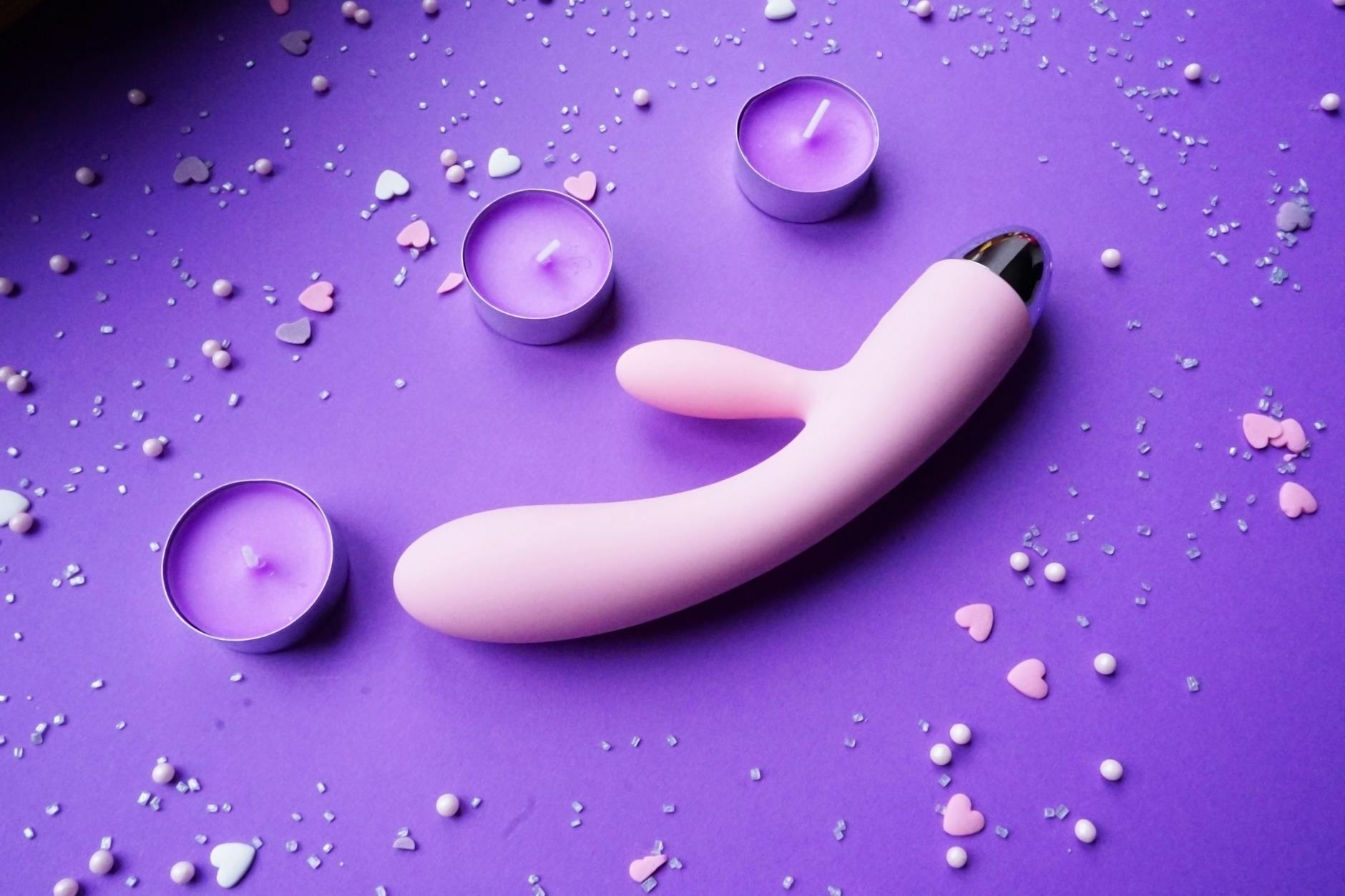
Let's start with what's actually happening
You want to bring a lemon vibrator into sex with your partner. Maybe you've been using one solo and it works brilliantly for you. Maybe you read something that made you think it could unlock a new dimension of shared pleasure. Maybe your partner suggested it first. Whatever the reason, there's a voice in your head saying: "But how do I bring this up without making things weird?"
Here's the thing: introducing a clitoral vibrator to partnered sex doesn't require a formal presentation or a serious talk. It requires clarity, ease, and a frame that centers pleasure for both of you, not inadequacy for either.
The conversation doesn't have to be a conversation
Most people overthink the introduction. They wait for "the right moment," craft the perfect words, then deliver it with the emotional weight of a tax audit. That's backwards.
The easiest route is often the most casual one. You're in bed, or heading toward it, and you say something like: "Hey, I've been using that lemon vibrator and it feels amazing. Want to try it together?" That's it. No preamble about your partner not being enough. No apology. No performance anxiety dressed up as a question.
If you want to give context before you're in the moment, fine. Pick a time when you're relaxed and not about to have sex. "I've been thinking about ways we could both feel even better together. I'm curious about trying the Lem during sex. How do you feel about that?" Straightforward. Curious. Collaborative.
The key is avoiding language that accidentally says: "I need this because you're not cutting it." Your partner's job is not to provide all stimulation. Your job is not to be everything they need. You're both there to feel good, and sometimes good requires a tool.
Where the lemon vibrator actually fits in partnered sex
Let's get practical. A lemon clitoral vibrator works best in partnered sex when it's complementary, not replacement. Here's what that means.
During penetrative sex, the vibrator sits on your clitoris while your partner is inside you. The sensation is completely different from solo use because you're getting simultaneous external and internal stimulation. For people with vulvas, this is often the most reliable route to orgasm during partnered sex. For partners with penises, the vibration creates a tighter sensation and different angle of pressure, which many find intensely pleasurable.
The vibrator can also work beautifully during oral sex. Your partner is using their mouth or tongue, and you introduce the vibrator for added stimulation. This gives you control over intensity in real time while they're focused on you.
Before penetration, the vibrator can warm you up faster. Fifteen to twenty minutes of clitoral stimulation builds arousal significantly, which makes the rest of the experience more pleasurable for everyone involved.
After penetration, if orgasm didn't happen, the vibrator gets you there quickly. No performance pressure, no stalling, just efficient pleasure.
How to actually use it together without awkwardness
Three practical rules:
First, lubricate generously. Water-based lube on your vulva, on the head of the vibrator, everywhere. This matters for comfort and sensation. Dry friction, even with a toy, can irritate tissue. Abundant lubrication turns the experience from "this is a tool" to "this is an extension of the pleasure."
Second, start with lower intensity. If you're used to running your lemon vibrator at pattern 5 or 6 solo, start at 2 or 3 with your partner present and inside you. Sensation changes when you're already aroused from partnered activity. Too much intensity too fast can overwhelm or even desensitize you. Build up.
Third, stay in conversation during sex. "Is this good?" "Want more or less?" "Try this pattern." Your partner can adjust their rhythm or depth based on what's working. You can guide the vibrator placement. This isn't clinical because you're already in the middle of intimate contact. The dialogue is a natural extension of what's already happening, not a departure from it.
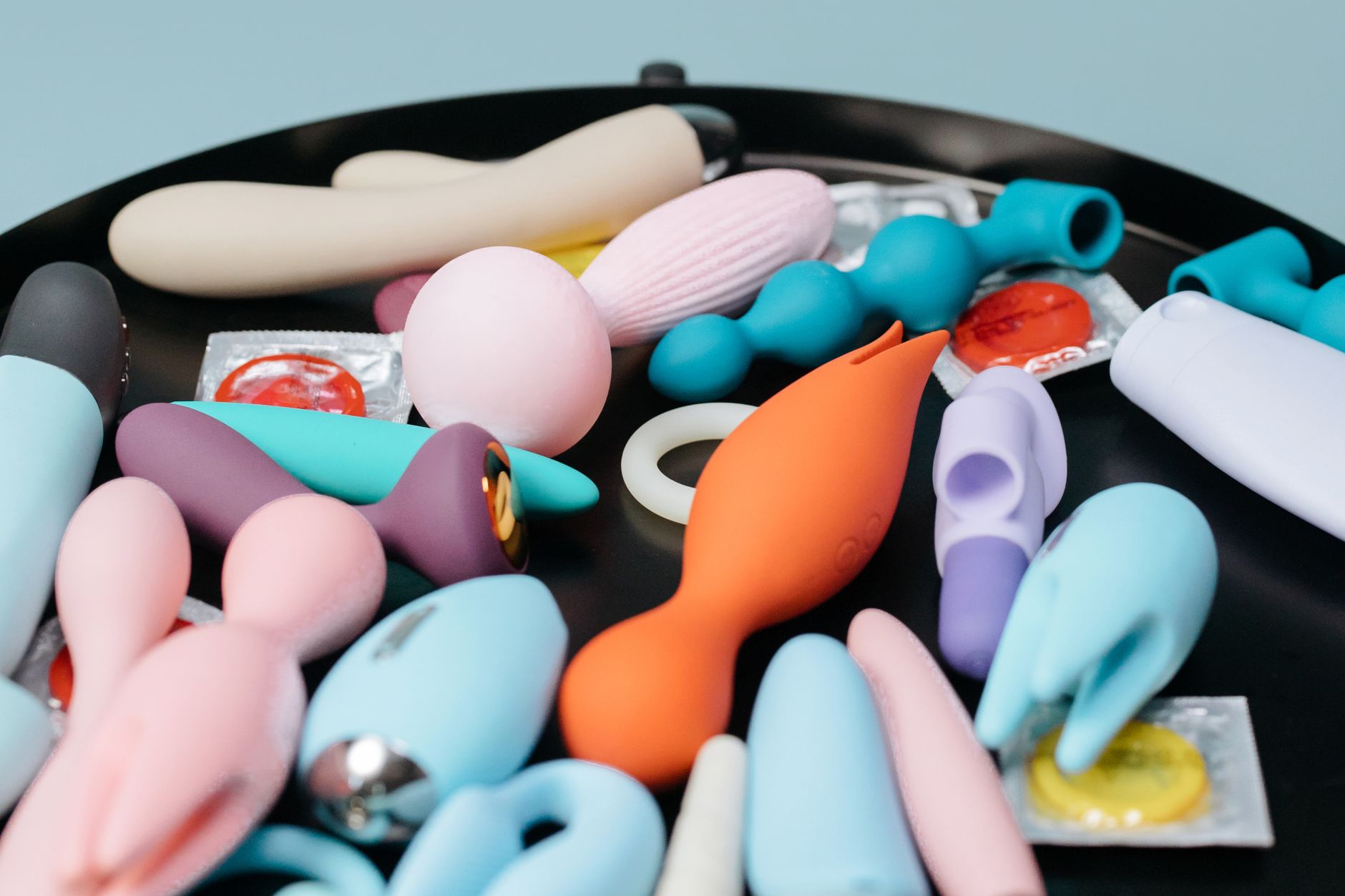
Photo by cottonbro studio on Pexels
Why your partner might feel weird about it (and how to defuse it)
Some partners worry that introducing a toy means they're being replaced. That's a real feeling, worth addressing head on.
The truth: a vibrator is not competition. It's addition. You can't have an emotional connection with a silicone toy. You can't have conversation, laughter, or the specific way your partner makes you feel. What the toy does is create physical sensation that your partner's body, by itself, can't replicate. It's not personal. It's physics.
If your partner expresses resistance, ask what specifically worries them. Is it about performance? Reframe it: "This isn't about you not being enough. It's about both of us having more fun." Is it about jealousy? Acknowledge it without apologizing: "I get it. And I want you there with me when I use it. This is us together." Is it about not knowing how to help? Show them. "You control the depth, I'll handle the vibrator." Clear roles, clear pleasure.
Some partners are immediately enthusiastic. Others take a minute. Both are fine.
The logistics that actually matter
Battery life. Check it before you're about to have sex. Nothing kills mood like a dead vibrator. Charge the Lem fully beforehand. You have plenty of time.
Cleanliness. Wash the vibrator with warm water and gentle soap before and after. It's part of sex hygiene, not a big production.
Position. Some positions work better than others. If you're on top, you have full control over the vibrator placement and can angle it exactly how you want. If your partner is on top, you might need to guide their hip position so there's space for the vibrator. Spooning or side-by-side positions often work well for penetration plus vibrator because there's natural space.
Communication about finish. Do you want to come first, or together, or does your partner prefer to come first? There's no right answer. But talking about it beforehand keeps things smooth.
When things feel awkward anyway
Maybe you introduced it, and the moment itself felt weird. That happens. It doesn't mean it won't work. New things feel new. That fades.
Let it sit for a minute. Then try again. If the awkwardness persists, check in after sex when you're calm. "That felt different. Want to try it again, or would you rather skip it?" Your partner might say they want to get more comfortable with the idea. They might want to tweak how you do it. They might say not right now, maybe later. All of those are workable.
The couples who report the most satisfaction with toys are the ones who treat them as an experiment, not an expectation. You're trying something together. It either becomes part of your regular rotation or it doesn't. Both outcomes are fine.
What makes it actually work
The difference between "we brought a toy into our sex life and it was awkward" and "we brought a toy into our sex life and it was amazing" is usually not the toy. It's the frame.
If you introduce it as a problem-solver for your orgasm, it feels clinical. If you introduce it as a tool for more pleasure for both of you, it feels integrated. If you act like it's NBD, your partner will too. If you treat it like a Big Deal, they will as well.
The vibrator is just facilitating something that's already happening. It's not the star. You and your partner are the star. The toy is the spotlight.
Most couples who use lemon vibrators together report that after the first or second time, it becomes normal. You reach for it the same way you might reach for lube or adjust a pillow. It's just part of the toolkit now.
FAQ
Can we use a lemon vibrator if we haven't talked about it first?
You could, but you probably shouldn't. If your partner is surprised mid-sex by a new toy, that's a boundary violation, even if unintentional. A thirty-second conversation beforehand takes care of it. "I want to try something. Cool?" That's enough.
What if my partner wants to use the vibrator on me but doesn't know how?
Show them. Tell them what feels good. "A little to the left. Try pattern three. More pressure here." Your partner isn't a mind reader, and toys aren't intuitive for everyone. Clear instruction makes it better for both of you.
Does using a vibrator together mean we should use it every time?
No. Some sessions are vibrator sessions. Some aren't. The beauty of having it as an option is that you can use it when it serves the experience and skip it when it doesn't. Your pleasure isn't obligated to be consistent.
What if the vibrator is too intense during partnered sex?
Start at the lowest pattern. You can always turn it up. You can't un-overwhelm sensation in the moment. Also, position matters. Holding it slightly off the clitoris instead of directly on it reduces intensity without losing sensation.
Can we use a lemon vibrator if my partner is uncomfortable with toys in general?
Yes, but you need their actual consent first. Discomfort is often about unfamiliarity, not rejection. Start with education, not introduction. Let them hold it. Explain how it works. Answer questions. Sometimes exposure reduces anxiety. If they remain uncomfortable, respect that. There are other ways to deepen pleasure together.
How do we know if using a vibrator together is actually helping our sex life or just covering up a problem?
A toy is an addition, not a fix. If you and your partner have poor communication, mismatched desire, or unresolved conflict, a vibrator won't solve those. But if your basics are solid and you're just looking to expand sensation and pleasure, a lemon vibrator can absolutely deepen things. Check your foundation first.
The real thing nobody tells you
Most couples report that the anticipation of introducing a vibrator is harder than actually doing it. You've built it up in your head as something that requires perfect words, perfect timing, perfect execution. It doesn't. It requires honesty and ease.
You want to use a lemon vibrator with your partner because it feels good and you think it could feel even better together. That's a normal thing. Say it simply. Your partner will respond to your confidence and clarity, not to how perfectly you frame it.
The toy is the easy part. The communication is the real work. And you've already decided to do that by reading this far.