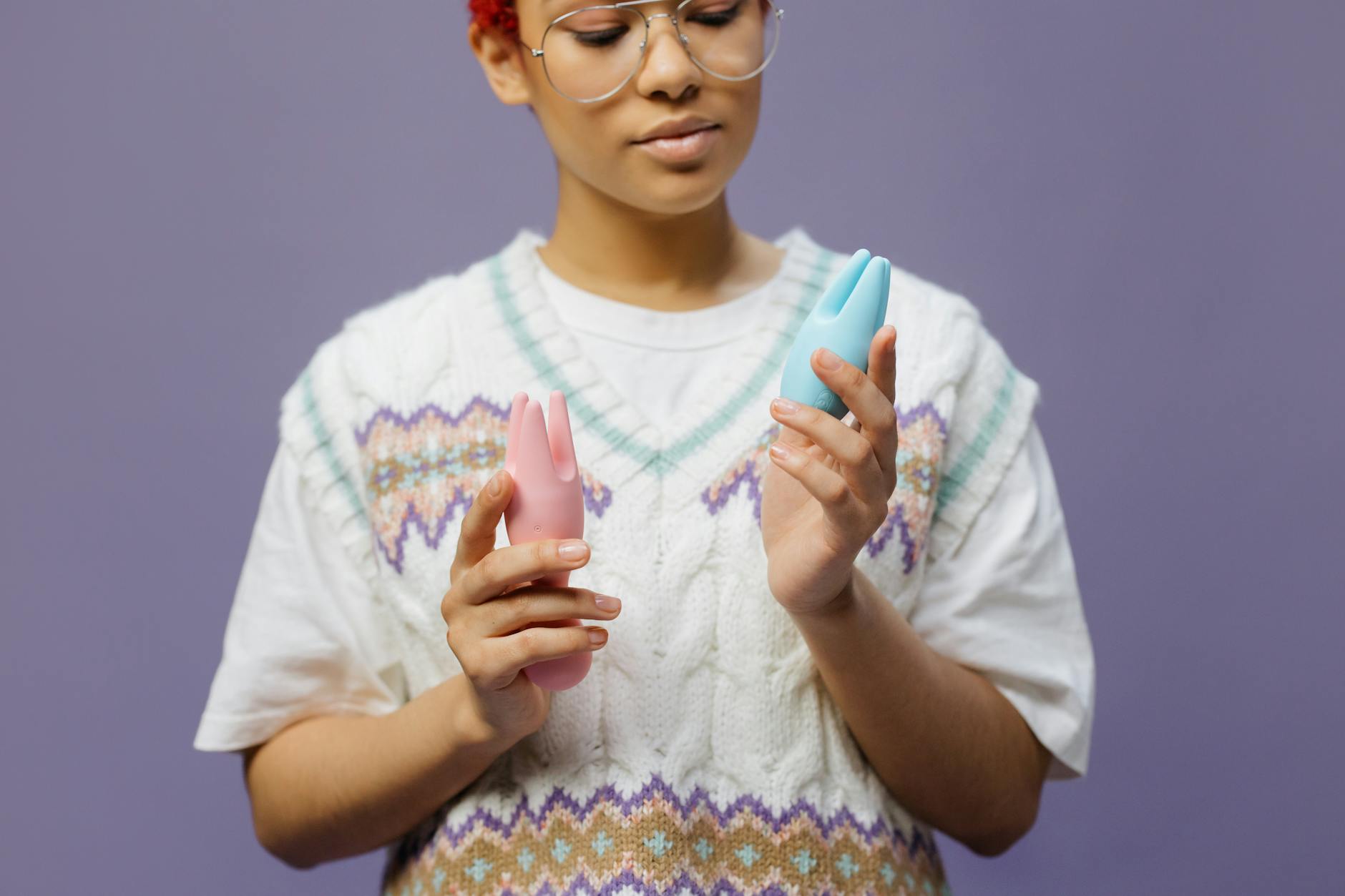
Here's what nobody tells you about clitoral sensitivity
Your clitoris has roughly 8,000 nerve endings packed into a tiny space. For some people, that's a feature. For others, it means standard vibration feels like someone's holding a jackhammer to the most sensitive part of your body. You're not broken. You're not "too sensitive." Your nervous system is just wired to register sensation more intensely, and that matters when you're choosing how to pleasure yourself.
The good news: a lemon clitoral vibrator works differently than traditional vibrators, and that difference can actually be the solution for sensitive clitorises.
Why standard vibrators feel too intense
Most vibrators use rapid, repetitive oscillation. That constant back-and-forth motion, even on low settings, can trigger overstimulation on a sensitive clitoris. The sensation crosses from pleasant to numbing or even painful in seconds. Some people describe it as feeling almost electrical or sharp, like the vibration is scrambling your nerve signals instead of awakening them.
Then there's the pressure problem. A lot of vibrators require you to hold them directly against the clitoris for the sensation to register. That sustained pressure, combined with rapid vibration, is exactly what makes sensitive clitorises feel overwhelmed.
A lemon vibrator uses air-suction technology instead of direct vibration. Rather than buzzing rapidly against tissue, it creates gentle rhythmic pulsing sensations that build gradually. Think of the difference between someone tapping you repeatedly on the shoulder versus creating a gentle, rhythmic pressure. Both can create sensation, but one is inherently less jarring for a sensitive nervous system.
How air-suction feels different on a sensitive clitoris
Air-suction vibrators like the Lem work by creating a seal around the clitoris and releasing pulsating waves of air pressure. This indirect stimulation is gentler because it doesn't rely on direct friction or aggressive oscillation. The sensation builds in waves rather than hitting all at once.
For people with sensitive clitorises, this matters enormously. You're not bracing for impact. You're not holding tension to avoid overstimulation. The pattern itself is designed to feel like a massage rather than an assault.
Many of my clients with clitoral sensitivity report that air-suction vibrators are the first tools they've used that actually feel good instead of uncomfortable. Some say they can use them for longer without that numb, overwhelmed feeling that usually sets in after a few minutes with traditional vibrators.
Start with positioning, not intensity
Even with gentler technology, positioning matters enormously for a sensitive clitoris. Here's how I recommend starting.
Don't use direct contact. Instead of pressing the Lem opening directly against your clitoris, angle it slightly so you're getting sensation from the outer rim or the side. This gives you all the benefit without the concentrated pressure that triggers sensitivity. You can always adjust inward as comfort grows.
Use a fabric barrier. Some people find that placing a thin cotton cloth between the toy and their skin softens the sensation just enough to feel good instead of irritating. It sounds counterintuitive, but even one layer of fabric can shift the whole experience.
Warm up longer than you think you need to. With a sensitive clitoris, arousal takes longer to build. Give yourself a full 15-20 minutes of foreplay, touching, or mental focus before introducing the toy. Your clitoris responds better when you're already warm and engaged.
The settings strategy that actually works
The Lem has multiple intensity levels, and for a sensitive clitoris, your default should not be the lowest setting on repeat.
Instead, try this approach: start at level 1 for 30-60 seconds. Notice how it feels. Then move to level 2 for the same duration. The point isn't to stay on the lowest setting forever. It's to give your nervous system time to acclimate to the sensation in small increments.
Once you've moved through levels 1-3 and your clitoris is responding, you might stay at level 2 or 3 for your session instead of pushing higher. Sensitivity often means you need less intensity to reach orgasm, not more. Fighting that is exhausting and counterproductive.
For some sensitive clitorises, that means you'll never use levels 4-5 of a lemon vibrator, and that's completely fine. Your pleasure doesn't need to match someone else's settings.
Lubrication changes everything
Driness amplifies clitoral sensitivity in a bad way. When tissue is dry, the friction and pressure feel harsher, more irritating. Adding lubrication doesn't just help with comfort; it changes how the vibrations actually register in your body.
Use a water-based lubricant around the entire clitoral area before you start, even if you don't think you need it. The added moisture cushions the sensation and makes the air-suction feel smoother and more luxurious.
Reapply halfway through if things start feeling dry or irritated. Your body's natural lubrication changes throughout your cycle, so what worked last week might need a boost this week.
The break-and-return technique
If you're used to overstimulation leading to numbness or pain, your instinct is probably to push through or stop entirely. Instead, try breaking your session into smaller intervals.
Use the toy for 3-5 minutes. Stop. Take a real pause, 2-3 minutes. Do something else: touch your body differently, breathe deeply, focus on sensation elsewhere. Then return to the toy. This pattern prevents the overwhelm cascade while still building toward orgasm.
You might cycle through this 3-4 times in a session. It feels longer, but the quality of sensation is dramatically better, and you'll likely reach orgasm more reliably because you're not fighting against your own nervous system's shutdown response.
When sensation shifts mid-session
With a sensitive clitoris, you might start feeling great at level 2, and then 10 minutes in, that same level feels numb or uncomfortable. This isn't failure. It's your nervous system telling you something changed.
Respond by lowering the intensity, changing the pattern (most lemon vibrators have multiple patterns), or taking a break. You're not "ruining it" by adjusting. You're being responsive to what your body is actually experiencing.
The partner conversation
If you're using a lemon vibrator with a partner, clitoral sensitivity often gets misunderstood as "you're not turned on enough" or "we need to go slower." That's sometimes true, but it's also sometimes completely false.
Sensitivity is a nervous system trait, not a desire problem. The clearest way to explain it: "I have a sensitive clitoris, so I need lower intensity and longer warm-up time. That's not about how I feel about you. It's about how my body is wired." Most partners get it immediately once it's framed that way.
Then show them what works. Let them watch you use the Lem at your preferred settings. That removes the guesswork and makes it a shared experience instead of a problem to solve.
FAQ
Can I use a lemon vibrator if my clitoris hurts with any touch?
Yes, but gently. If even light touch is painful, check in with a doctor first to rule out vulvodynia or other medical causes. If pain is diagnosed, a lemon vibrator's gentler approach is often recommended over traditional vibrators. Start with the positioning tricks above and very short sessions.
Does clitoral sensitivity go away over time?
Sometimes. Regular, pleasurable use of a tool like a lemon vibrator can actually help your nervous system recalibrate and become less reactive. But some people are just wired for sensitivity long-term, and that's fine. You're learning what works for you, not trying to change your baseline.
Can I use a lemon vibrator during my period if my clitoris feels extra sensitive?
Absolutely. Hormonal shifts during your period often increase clitoral sensitivity, so this is exactly when adjusting your approach helps most. Use the same strategies: lower intensity, longer warm-up, more lubrication, break-and-return intervals.
What if the Lem still feels too intense even on the lowest setting?
Try positioning it farther from direct contact, use the fabric barrier trick, or add a second layer. You could also consider whether your sensitivity is situational (stress, dehydration, fatigue) or consistent. If you're well-rested, hydrated, and not stressed, then this positioning and lubrication focus is your path. If you're often depleted, address that first.
Does clitoral sensitivity mean I won't have good orgasms?
No. Some people with sensitive clitorises report their orgasms are more intense and full-body because their nervous system is already primed. Sensitivity doesn't prevent pleasure. It just means you need the right approach.
Should I be worried if my sensitivity feels different than my partner's?
Not at all. Clitoral sensitivity varies wildly between people. It's affected by genetics, hormones, stress, pelvic floor tension, and a dozen other factors. Your sensitivity is information about you, not a comparison point.
The bottom line
A sensitive clitoris isn't something to work around. It's something to work with. A lemon vibrator's gentler approach makes that possible. You deserve pleasure that feels good, not overstimulating. Take the time to find your settings, your positioning, your rhythm. That's not selfish. That's exactly what pleasure is supposed to be.
If you're still figuring out what works, or if you want to talk through your specific situation, reach out. That's what we're here for.