
Let's name the fear first
You're not anxious about the toy itself. You're anxious about what introducing it means. Does it mean he's not enough? Does it mean you're rejecting him? Does it mean you want something he can't give you? And underneath all of that: will he feel hurt, defensive, or less-than?
Honestly, that's the real conversation happening in your head. And it's worth having with yourself before you have it with him.
What the research actually says about partners and sex toys
Here's the thing nobody tells you: most partners don't feel threatened by a lemon vibrator. They feel relieved. Couples who introduce toys together report higher sexual satisfaction and better communication overall. The American Psychological Association has documented that couples who explore pleasure together experience deeper intimacy, not less.
But here's the twist. The anxiety you're feeling isn't irrational. It's real because you've been socialized to believe that your pleasure should be contingent on his presence, his effort, or his ability to provide it. If you need a toy, the story goes, you've somehow failed at desire or he's failed at providing it. That story is garbage. But it's sticky garbage, and it lives in your nervous system.
That's the actual thing to work through, separate from the conversation about the toy itself.
The difference between shame and vulnerability
Shame says: I can't tell him because there's something wrong with me.
Vulnerability says: I'm going to tell him something true about myself, and I don't know how he'll react, and I'm doing it anyway.
Those aren't the same thing. Shame keeps you stuck in the closet with a lemon vibrator. Vulnerability is what actually opens the door.
Before you bring up a lemon clitoral vibrator with your partner, get clear on which one you're feeling. If it's shame, you need to process that first, maybe with a therapist or a trusted friend. If it's vulnerability, that's normal. That's the edge of intimacy. That's where the good stuff lives.
How to frame it so it's not about him
This is crucial. Your partner's brain is going to do a threat assessment the moment you say "I want to use a toy." His nervous system will interpret that as data about himself, not about you. You have to deliberately redirect that.
Instead of: "I want to use a vibrator because you can't make me come."
Try: "I've been thinking about exploring my own pleasure more intentionally. I want to experiment with a lemon vibrator on my own first, and eventually with you. This is about me getting to know my body better, not about anything you're doing or not doing."
The second version is true. It's also specific. It's not vague and it's not accusatory. It gives him information instead of making him guess what your real complaint is.
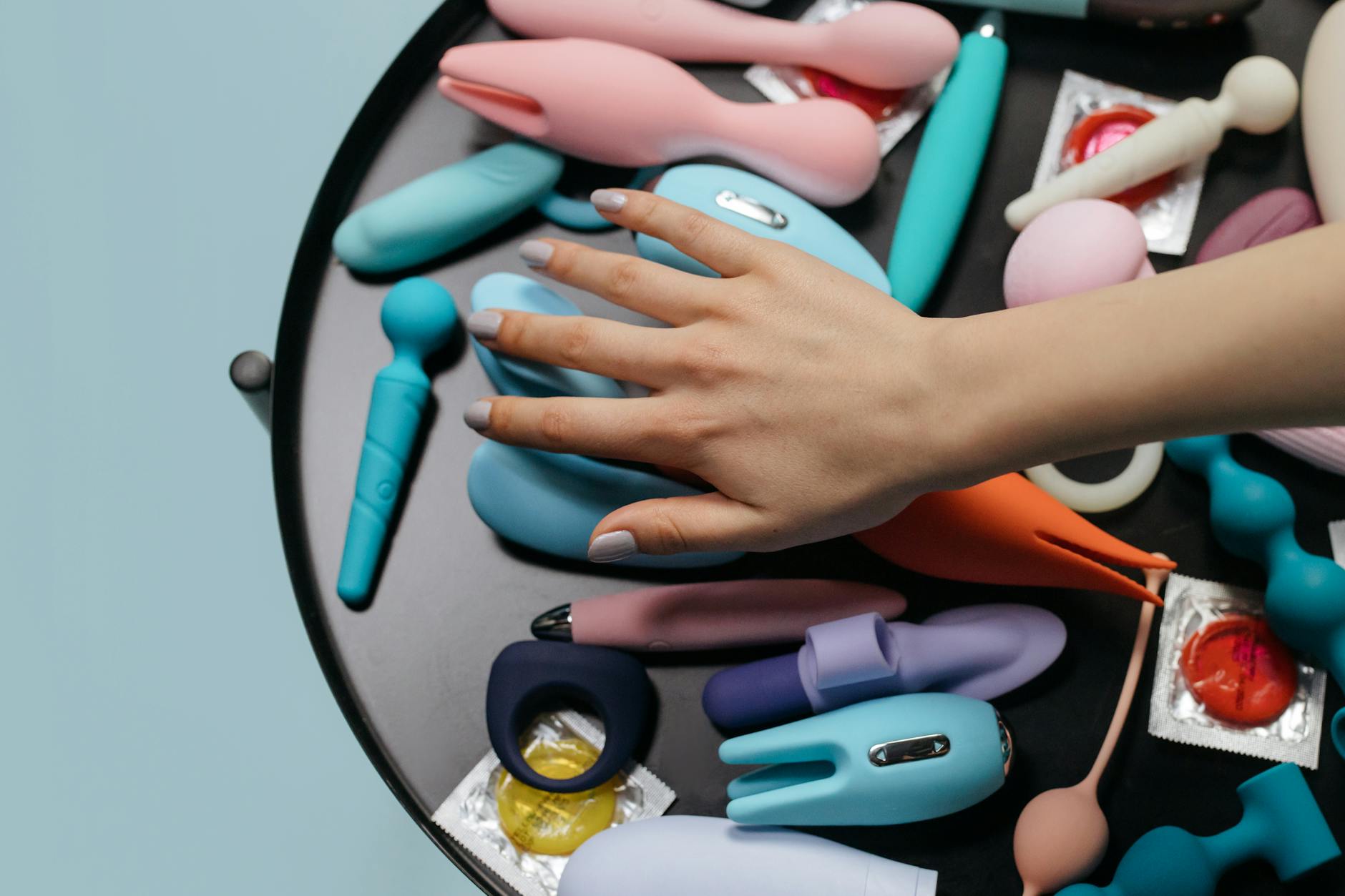
Photo by cottonbro studio on Pexels
The timing and location matter more than you think
Don't have this conversation right before sex. Don't have it right after he's initiated and you said no. Don't have it when he's tired, stressed, or thinking about work.
Pick a time when you're both relatively calm and have thirty minutes of uninterrupted space. Make tea. Sit next to each other, not across a table. Create the opposite of a defensive setup.
If you're someone who gets anxious and shuts down, script your opening line. Write it down if you need to. "I want to talk about something that's making me nervous, and I need you to know it's not about you before I say it." That gives his brain a heads-up to shift out of threat mode.
What to do if he reacts badly
Sometimes they do. Sometimes a partner says something like "I thought I was enough" or "That feels like you're rejecting me." In that moment, you have a choice. You can collapse into the shame you were already feeling, or you can stay grounded.
You say: "I understand that feels threatening. That's not what this is. My pleasure and my curiosity about my own body don't take anything away from you. In fact, understanding myself better usually makes sex better for both of us."
If he stays in that defensive posture and refuses to hear you, that's useful information about your relationship. It suggests that his need to feel adequate is more important than your need to explore yourself. That's a bigger conversation than a lemon vibrator. That might be a conversation to have with a couples therapist.
But most partners, given clear information and reassurance, move past the initial defensiveness pretty quickly.
Introducing the actual lemon vibrator
Once you've had the conversation, don't rush to use it together. Use it alone first. Get familiar with it. Figure out what patterns you like, what intensity, how long it takes you to come with it.
When you feel ready to use it with your partner, frame it as an addition, not a replacement. "I want you to watch me use this," or "I want to use this while you're touching me," or "I want us to use this together on me." Those are different experiences, and they're all collaborative.
Many partners find it genuinely hot to watch their partner discover pleasure. Some partners use the time to learn what their partner responds to. Some just like being included in the exploration. Give him a role that feels good instead of leaving him passive and wondering what he's supposed to be doing.
If you're nervous, start slow. Use a lemon sucker vibrator at a lower intensity while you're close to him. Let him see that you're still present with him, still connected, just adding something new to the mix.
The conversation after
Once you've actually used a lemon vibrator together or after he's seen you use one, check in. "How did that feel for you?" "Did you like watching?" "Is there anything you want to try next time?"
This normalizes the conversation. It signals that pleasure exploration is something you talk about, not something you hide. Over time, that builds trust in a way that actually deepens intimacy.
The irony is that most of the anxiety you're feeling right now won't survive actual vulnerability. Once you've said the scary thing out loud and he didn't leave, didn't get angry, and actually engaged with you about it, the power of that fear diminishes significantly.
Your pleasure matters. Your curiosity matters. Your right to explore your own body matters. A partner worth keeping wants those things for you.
Frequently asked questions
What if my partner says he feels like I'm cheating with a toy?
That framing suggests he doesn't understand the difference between a tool and infidelity. A lemon clitoral vibrator is not a substitute for intimacy. It's a device that helps you understand your own body. You might say: "A vibrator is to my pleasure what a shower is to hygiene. It's self-care, not a betrayal. I'm not being intimate with a toy. I'm being intimate with myself, and with you when you're here."
How do I know if he's just saying he's okay with it but actually isn't?
Watch his actions over the next few weeks and months. Does he bring it up? Does he seem interested in how you're using it? Or does he get quiet, withdrawn, or critical when sex comes up? Men who are genuinely okay with a toy usually become curious about it pretty quickly. If he stays silent and resentful, that's a sign the conversation isn't actually finished.
Should I hide the lemon vibrator if I'm not sure how he'll react?
Not long-term. Hiding it reinforces the shame you're trying to work through. Short-term storage in a discreet place is fine. But eventually, he's either going to know about it or you're going to spend years in a relationship where you can't be honest about basic parts of yourself. That's not sustainable.
What if we have completely different comfort levels with toys?
Then you're having a compatibility conversation, not a toy conversation. Some partners are genuinely not interested in incorporating toys. That's okay. What's not okay is you giving up your own exploration because he's uncomfortable. You can use a lemon vibrator alone, enjoy it, and accept that it's not a couple activity. You can both be happy.
How do I bring this up if we've never talked about sex directly?
Start smaller. Have conversations about what feels good, what doesn't, what you'd like to try. Build communication gradually. Once you've practiced being honest about sex in small ways, introducing a toy is actually the easier conversation.
Can I use a lemon vibrator if my partner is completely against it?
Yes. Your body is yours. You can use a lemon clitoral vibrator whether your partner approves or not. But do understand that if he finds out and feels betrayed by the secrecy, that's a relationship issue separate from the toy itself. The real question is whether you want to stay in a relationship where you can't be yourself.
The bigger picture
Introducing a lemon vibrator to your partner isn't really about the toy. It's about claiming the right to your own pleasure, to your own body, and to honesty in your relationship. That takes courage, especially if you've been conditioned to prioritize his comfort over your exploration.
But here's what I've seen over decades of working with couples: the relationships that survive and thrive are the ones where both partners can say hard truths and stay connected anyway. A lemon vibrator is just the object that gives you permission to practice.
Your pleasure matters. And you deserve a partner who knows that.