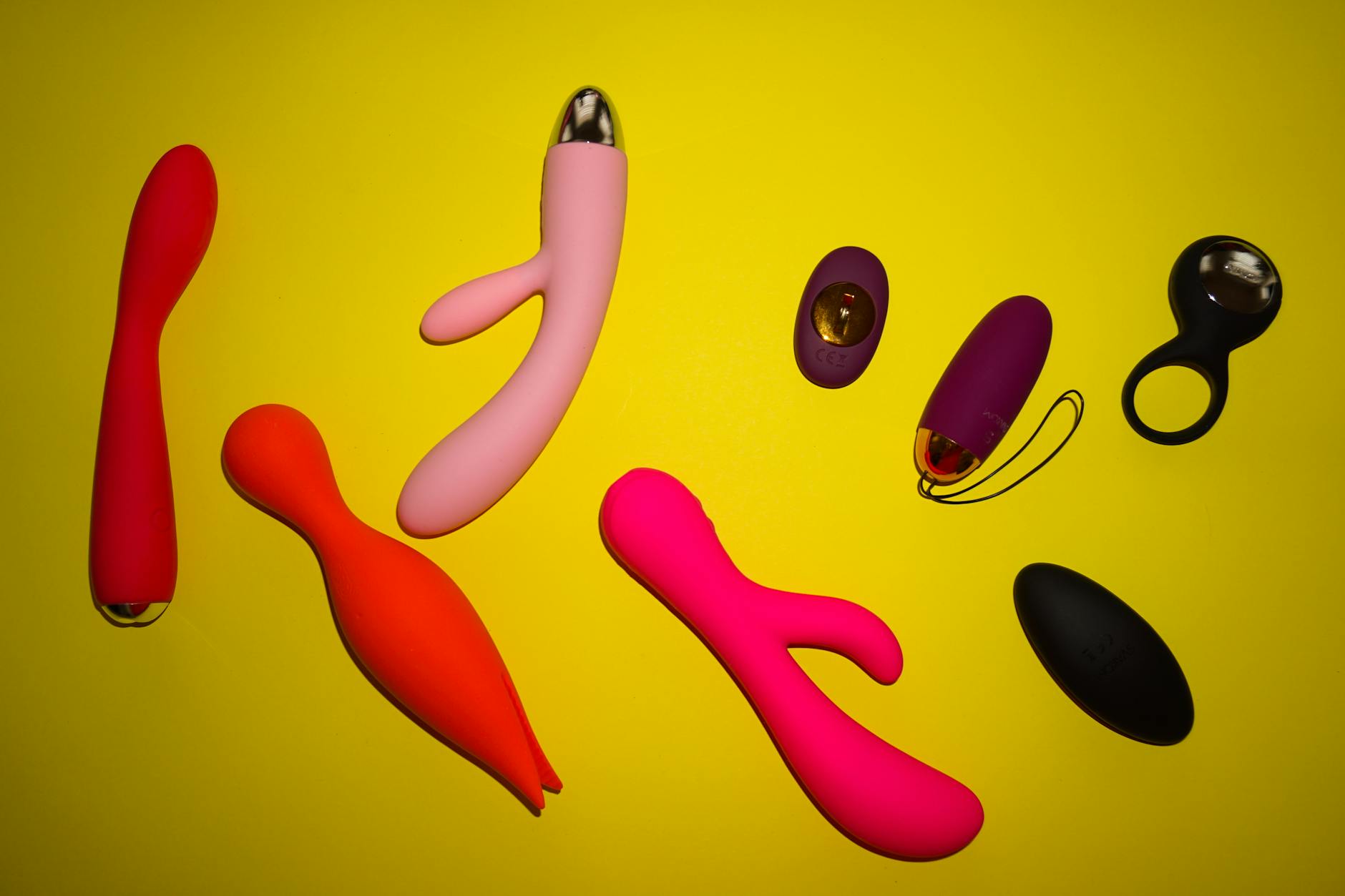
Let's be real about the actual fear
You want to introduce a vibrator. But you're worried your partner will think you're bored, that they're not enough, or worse.that you're planning to replace them. So you say nothing, and the vibrator stays in a drawer, untouched, because the imaginary rejection feels safer than the real conversation.
Here's what I've learned after years working with couples on exactly this: the awkwardness isn't about the vibrator. It's about what you think it means. Once you separate the tool from the emotion, the conversation becomes almost easy.
The thing your brain is getting wrong
Your body doesn't orgasm from one thing. It orgasms from combination.a person's touch, mental focus, the right pressure in the right spot, being present, feeling safe. A vibrator isn't a replacement for any of that. It's a tool that adds one specific input your partner's hand literally cannot replicate.constant, high-frequency stimulation at a precise point.
That's not cheating on your partner. That's editing the playlist so the song you want actually plays.
Why does this matter? Because if you approach the conversation from "I want to add something that helps me feel good" instead of "my body isn't working right," your partner hears it completely differently. One is collaborative. The other is defensive.
The conversation script that actually works
Stop treating this like a confession. Treat it like sharing something you're curious about.
Pick a moment when you're both relaxed, not mid-sex, not mid-conflict. You want neutral ground for this. Then:
Start with something true. "I've been thinking about how I experience pleasure, and I realized there's a specific kind of stimulation that really helps me orgasm." That's it. No apology. No heavy framing.
Name what you want. "I'd like to try a clitoral vibrator with you. Not instead of what we do, but alongside it." Alongside matters. It signals partnership.
Give context if your partner seems hesitant. "I read that most people with vulvas can't orgasm from penetration alone, and honestly, that's my body too. I want to work with what I have, not against it." You're not saying they're failing. You're saying you're being practical.
The offer. "I'd love for you to be part of this. You could help choose one, we could explore it together, whatever feels comfortable." This is the critical part. You're not buying a secret toy and hiding it. You're inviting them into the solution.
If they react badly, that's real information about what you're working with. But most people react badly because they're scared, not because they're actually opposed. The fear usually dissolves when they realize you're not replacing them.
What to do if they say yes
Now the practical part: how to actually use it together.
Let them hold it first. Seriously. Having them feel the vibration on their own hand before it touches you removes mystery and reduces anxiety. They get to understand what it does, what the intensity levels feel like, and how quiet (or not) it is.
Start in a position where they're involved. You lying on your back while they sit beside you is ideal. They can use the vibrator on you, or you can use it while they're inside you, or they can touch you in other ways while you use it. The point is they're present and contributing, not watching from the sidelines.
Talk during. "That feels good," or "a little lighter," or "exactly there." This turns it into a duet instead of a solo performance. They're getting real-time feedback. You're not disappearing into your own head.
A lemon clitoral vibrator like the Lemon is specifically designed for this because the suction action mimics what fingers and tongues do, just more consistently. Your partner will probably notice that it doesn't feel alien or cold.it feels like an extension of what's already happening.
The thing that changes when you integrate a vibrator
Here's what couples tell me: using a vibrator together actually deepens connection, not the opposite.
Why? Because you're finally orgasming. Reliably. And that changes everything about how you experience your partner, the experience, even yourselves. When you're not spending the entire time wondering if it's going to happen, you're actually present. You can notice their breathing, their skin, the way they respond to watching you feel good. That's intimacy.
Also, practically: if you used to fake it, you don't have to anymore. That's enormous. You stop performing and start participating. Your partner stops wondering if they're doing it right and starts knowing, because they can see the results.
One more thing nobody talks about: using a vibrator together is permission for your partner to let go of the idea that they have to be everything. That's a relief for them too.
If your partner is still resistant
Sometimes resistance isn't about insecurity. Sometimes it's about control, or discomfort with sexuality generally, or they genuinely don't understand the anatomy. Here's where you might need a different conversation.
If it's "I don't want you touching yourself when I'm here," that's a control issue and worth addressing with a therapist. A partner who's comfortable with your pleasure shouldn't need to be the sole source of it.
If it's "I don't know anything about this stuff," that's fixable. Show them articles, especially ones that talk about how vibrators work with the body, not against it. Sometimes seeing the science helps.
If it's genuine discomfort with toys in general, slow down. You don't have to solve this in one conversation. Plant the seed, give them time, and revisit it in a month.
But if it's "I don't want you to have pleasure outside of what I provide," that's a different conversation entirely. And it might be the important one.
The thing to remember
Your pleasure is not a threat to your partner. It's an invitation. The fact that you're thinking about how to introduce this carefully, how to make them comfortable, shows you already understand that. You're not being selfish by wanting to orgasm more reliably. You're being honest. And honesty is where real connection happens.
People also ask
Can using a vibrator together actually improve our sex life?
Absolutely. The most common complaint I hear from couples is mismatched expectations around orgasm. One partner feels frustrated because they're not "getting the other there," and the other partner feels broken because it's harder for their body. A vibrator removes that dynamic. Suddenly you're working together toward the same goal instead of one person performing and one person failing. Plus, when someone finally experiences reliable orgasm, the entire relationship around sex shifts. They're more interested, more present, and honestly more confident.
What if we've been together for years and suddenly I want to introduce this?
It's actually easier after years together. You have a foundation of trust. The key is framing it as evolution, not correction. "I've been thinking about what helps my body, and I'd like to explore this with you" sounds different than "this isn't working." You're not saying the relationship sex has been bad. You're saying you've learned something new about yourself and want to deepen the experience together.
How do I know which vibrator to choose to introduce first?
Start with something that mimics what bodies naturally do. A lemon clitoral vibrator uses suction instead of just vibration, which feels more familiar and less clinical to most people. It's also quieter and less intimidating than a traditional wand. If you're introducing this for the first time as a couple, familiar usually wins over experimental. You can get fancy later.
What if they're worried it means I don't enjoy what we already do?
Tell them directly: "This isn't about what we do. It's about adding something specific that helps my body. Like how you might use lotion to make touch feel better. It's an addition, not a replacement." Then show them what that looks like. Use the vibrator while they're inside you. Use it while they're touching you. Prove that it's collaborative, not solitary.
Is it normal to be nervous about this conversation?
Completely. You're talking about your own pleasure, which a lot of people were never taught is okay to prioritize. You're also potentially vulnerable to rejection or misunderstanding. That nervousness makes sense. But here's what's also true: partners who love you want you to feel good. Most resistance comes from fear or lack of understanding, not actual opposition to your pleasure. Give them the chance to surprise you.
How do I bring this up if we've never talked about toys before?
Start smaller. Mention something you read, not something you want. "I came across this article about how most bodies work better with vibration," or "I listened to a podcast where someone talked about this." That opens the door without putting yourself on the line immediately. Then, when they seem open, you can say "I've been thinking about trying it." You're testing the water before you dive in, which is smart and fair to both of you.
What comes next
Introducing a clitoral vibrator to partnered sex is one of the most practical investments you can make in your relationship. Not because it's magic, but because it solves a real problem. It gives your body what it needs to orgasm, removes performance anxiety from both partners, and frankly, makes sex better for everyone involved.
The conversation will feel awkward for about thirty seconds. The experience will feel amazing for much longer than that. That's a trade worth making.
If you're still nervous about how to have this conversation, or if you and your partner are navigating other shifts around pleasure and intimacy, we're here to help. Reach out at /contact to talk through what's happening in your specific relationship.