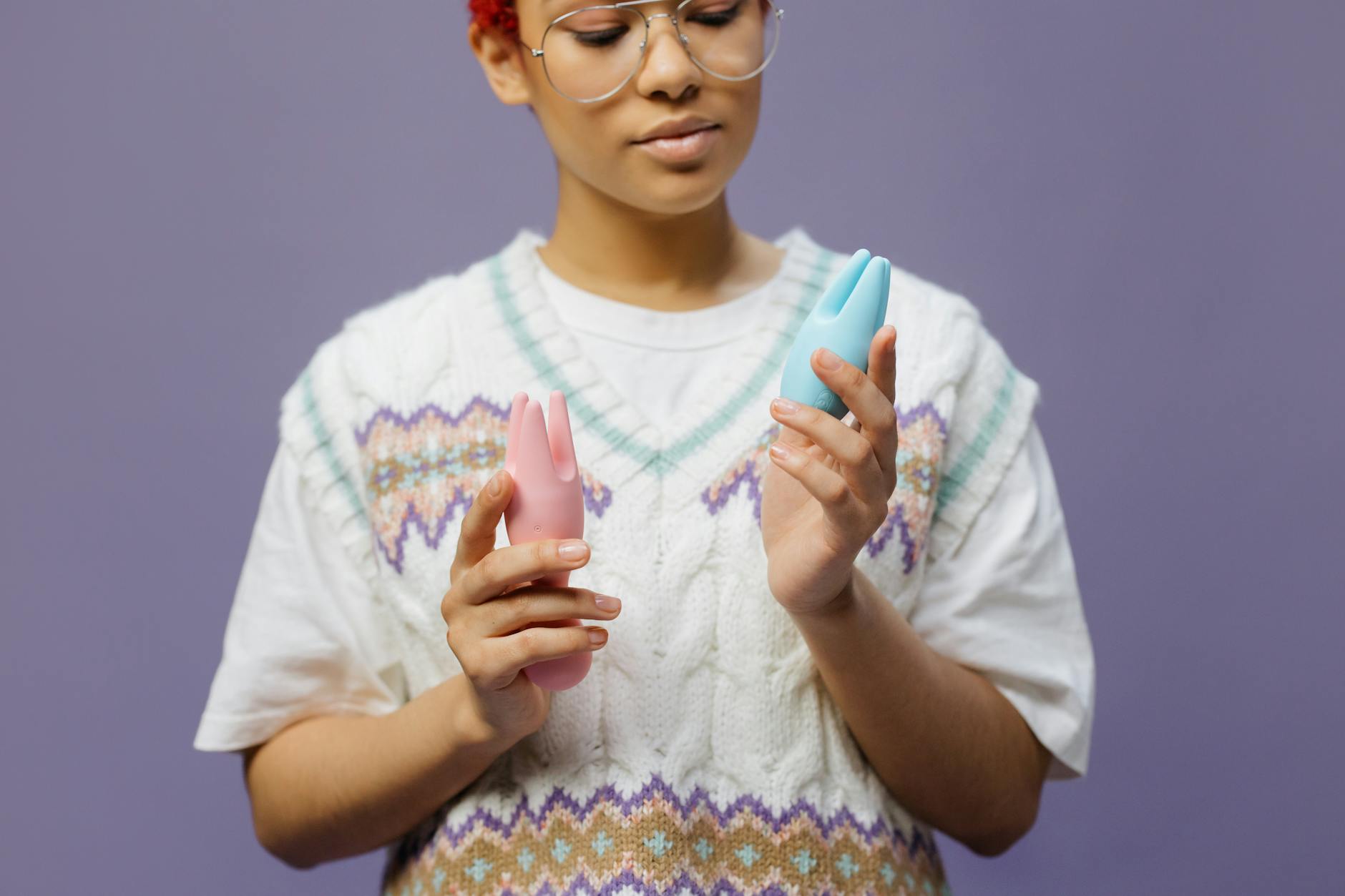
Here's the thing nobody tells you about hormonal birth control
You go on the pill, the patch, the ring, or the implant to prevent pregnancy. No one sits you down and says: "By the way, this might make arousal feel like trying to remember a dream you had last week." But for a lot of people, that's exactly what happens. The brain fog isn't just about clarity. It's about desire. And desire lives in your brain before it travels anywhere else.
I work with couples and individuals navigating this exact problem. The pattern is almost always the same. They start a new birth control method, everything feels fine for the first month or two, then arousal just... quiets. Not disappears. Quiets. Like someone turned the volume down on your own desire and didn't give you the remote.
Why hormonal birth control affects arousal specifically
Hormonal birth control works by suppressing your natural hormonal cycle. The progestin and estrogen (or just progestin, depending on the method) override your body's natural signaling. This is exactly what makes it effective at preventing pregnancy. The problem is that your arousal system doesn't run on just one channel.
Your baseline desire depends partly on testosterone. Most of the research focuses on testosterone in people with testosterone-producing bodies, but here's what matters: hormonal birth control often lowers the free testosterone available in your system. You still have the hormone, but less of it is accessible to your brain and tissues.
At the same time, the progestin in many birth control methods can increase serotonin in some people and reduce it in others. If it increases serotonin, your mood might stabilize but your arousal flattens (SSRIs do this too, which is why how lemon vibrators help with arousal when you're taking SSRIs is its own conversation). The fog you feel is real. It's not psychological. It's neurochemical.
The dopamine problem that birth control creates
You need dopamine to feel desire. Dopamine is the neurotransmitter that makes you want something. Hunger, curiosity, arousal, motivation. All dopamine. Hormonal birth control doesn't directly block dopamine, but it can make it harder for your dopamine system to wake up in response to erotic cues.
This is particularly true in the first few months of a new method. Your brain is used to a cycling hormone pattern. When you flatten that pattern artificially, your dopamine receptors recalibrate. It takes time. Sometimes it takes months. Sometimes it never fully comes back, which is worth discussing with your doctor.
The fog you're experiencing isn't just mental fatigue. It's a muted response to stimulation. Even if something is objectively arousing, your brain doesn't register it the same way. The signal is there but the volume is down.
Why lemon vibrators bypass the problem
Here's where a lemon clitoral vibrator changes things. Instead of waiting for arousal to build on its own (which birth control is actively making harder), you're providing consistent, focused stimulation directly to nerve-rich tissue.
The clitoris has about eight thousand nerve endings concentrated in a small area. A lemon vibrator like the ones from My Lemon Sexual Toy uses air-suction technology, which means it's not relying on your arousal system to create sensitivity. It's creating it through mechanical stimulation.
When birth control has lowered your dopamine response, you need a shortcut. You need something that doesn't ask your brain to produce desire on demand. Instead, it meets your body where it is and builds sensation from there. That's what a lemon sucker does. It doesn't care whether you're mentally present or foggy. It generates response through stimulation.
Many people find that once the physical sensation starts, their mental arousal catches up. The body leads and the brain follows. This is the opposite of how arousal usually works when you're not on birth control (usually desire comes first), but it's genuinely effective when desire is chemically suppressed.
Starting with lower intensity when you're in the fog
When your baseline arousal is already dampened, diving straight into intensity often backfires. You end up feeling numb or the stimulation feels uncomfortable rather than pleasurable.
Start with the lowest setting on a lemon vibrator. Let your body adjust to the sensation for a few minutes before increasing intensity. This lets your nervous system recognize the stimulation as pleasure rather than just sensation. You're training your brain to respond, not fighting against the chemical suppression directly.
Also worth knowing: the sensation of air-suction is different from traditional vibration. If you've used buzzing vibrators and found them numbing, a lemon clitoral vibrator often works better precisely because the stimulation pattern is distinct. Your body has had time to habituate to other sensations. The suction feels new, which can actually be an advantage when you're trying to wake up a muted arousal system.
How to actually use lemon vibrators when your arousal is foggy
Three practical moves:
First, remove the pressure. You're not trying to have an orgasm. You're trying to build sensation. If orgasm happens, great. If not, that's not a failure. Birth control fog can also suppress orgasmic response, so don't make that the goal.
Second, build time into it. When arousal is dampened, you need longer warm-up than you think. Budget 15 to 25 minutes. Start at pattern 1, spend 3 to 5 minutes there, then increase. Let your body catch up with the stimulation.
Third, try it when you've already got other things working for you. Read something that makes you feel desire. Look at images that appeal to you. Get into a space where you feel safe and a little excited. Then add the lemon vibrator. You're stacking small doses of arousal until they reach critical mass.
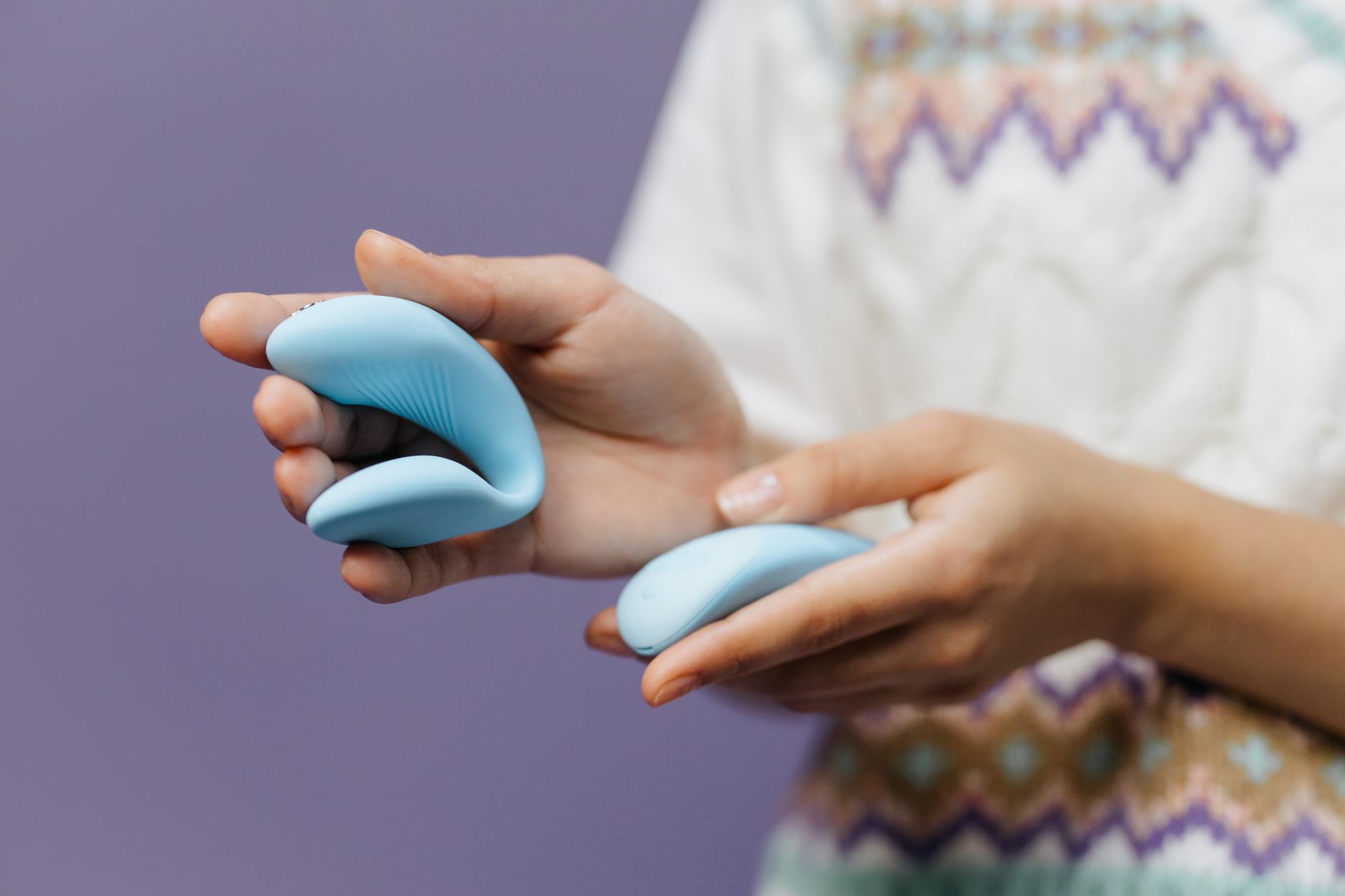
Photo by cottonbro studio on Pexels
When to talk to your doctor about the fog
If you've been on your current birth control for three months and arousal still feels absent, it's worth a conversation. Not because something is wrong with you, but because there are options.
Different birth control methods suppress arousal differently. An implant that releases a lower dose of progestin might affect you less than a higher-dose pill. A copper IUD (which is non-hormonal) wouldn't affect your arousal chemistry at all. The ring sometimes feels like a gentler option than the pill because your body absorbs the hormones differently.
Also worth mentioning: if the fog is paired with lowered mood, anxiety, or other cognitive changes, that's medical information your doctor needs. Sometimes switching to a different hormonal contraceptive helps. Sometimes adding a low dose of testosterone (particularly useful if you're using a method that aggressively lowers it) can help. Sometimes non-hormonal options become the better choice.
The point is that birth control brain fog is common enough that good doctors take it seriously. If yours doesn't, find one who does. Your arousal matters.
Pairing lemon vibrators with other reclamation practices
A lemon vibrator is a tool, not a solution. When birth control has flattened your arousal, you often need a few things working together.
Consider adding back touch that isn't goal-oriented. Massage, time in warm water, being held. When you're in arousal fog, non-sexual physical contact sometimes wakes up your sensory system faster than jumping straight to genital stimulation.
If you're partnered, how to use lemon vibrators with a partner is its own conversation. But the basic principle stands: the vibrator can do the heavy lifting of generating sensation while you and your partner focus on other kinds of connection.
Also keep in mind that sometimes the fog is compounded by other things. If you're stressed, sleep-deprived, or dealing with relationship tension, the birth control is making it worse, not causing it entirely. Address what you can. Use the lemon vibrator to work around what you can't control immediately.
The reality of reclaiming arousal on birth control
Your desire is still there. It's not gone. It's suppressed. That's a neurochemical state, not a personality shift. Lemon clitoral vibrators work because they don't wait for desire to show up. They create sensation that your brain then codes as pleasure, and that codes as arousal, and sometimes that leads back to desire itself.
The fog is temporary, at least in the sense that it can be worked with. You can use tools like a lemon vibrator. You can change your birth control method. You can add practices that wake up your sensory system. You can talk to your doctor and your partner about what you're experiencing.
Your arousal matters because pleasure matters. Not because anyone else needs it, but because you deserve to feel alive in your own body.
People also ask
Does hormonal birth control permanently damage arousal?
No. For most people, arousal returns when they stop the birth control. For some, it takes a few weeks or months after stopping because your body needs time to reestablish its natural hormone cycle. For others, arousal shifts but doesn't disappear entirely. The change is neurochemical, not structural. If you're concerned about permanent effects, this is worth discussing with a doctor who specializes in reproductive health, but permanent damage is not the typical outcome.
Can switching birth control methods help with arousal fog?
Yes, sometimes significantly. Different methods suppress hormones differently. A lower-dose pill, a hormonal IUD with minimal systemic absorption, or a non-hormonal method like a copper IUD can all affect arousal differently than your current method. It's worth trying a different approach if the fog persists beyond three months. Keep detailed notes about mood, energy, and arousal between tries so you can identify patterns.
How long does it take for arousal to come back after starting birth control?
Varies widely. Some people feel a shift within the first two weeks. Others see changes at the three-month mark when their body has fully adapted to the hormonal change. Still others find that arousal stabilizes after six months. If nothing has shifted after six months, that's a sign the method might not be right for you rather than a sign that you need to wait longer.
Will a lemon vibrator work if I have no desire at all?
Yes, usually. A lemon clitoral vibrator works through mechanical stimulation, not by requiring baseline desire. That said, if you have zero interest in any kind of pleasure or sensation, that might indicate depression or another medical issue worth discussing with a doctor. But fog-based lack of desire (where you theoretically want desire but can't access it) responds well to mechanical stimulation.
Is it normal for birth control to affect arousal this much?
Yes. Studies show that between 15 and 40 percent of people using hormonal birth control report changes to arousal or sexual function. It's common enough that it should be part of the conversation when you start any hormonal method. If your doctor acts surprised by this, find a more sex-informed provider.
Can I use a lemon vibrator while on any type of birth control?
Yes. A lemon sucker from My Lemon Sexual Toy is compatible with all birth control methods. If you're using a device like a hormonal IUD, the vibrator doesn't interact with it. If you're using an internal device like a ring or internal hormone regulator, external clitoral stimulation is completely safe. Always check that your IUD strings are in the right position if you're using any internal device, but external vibrators pose no risk to contraception.
Sources and further reading
Alters, C.M., Pereira, V.M., & Strauss, R.A. (2019). "Hormonal contraceptive use and sexual function." Current Sexual Health Reports, 11(4), 42-51.
Dias, G.P., & Shaikh, H. (2018). "Neurobiology of sexual arousal: Focus on dopamine and prolactin." Archives of Sexual Behavior, 47(5), 1362-1375.
Jöchle, W. (2002). "Mifepristone (RU 486) and human sexuality: A review." Journal of Clinical Psychiatry, 63(2), 38-47.
Mobley, A., Butter, S.C., & Dennie, M. (2014). "A review of the biopsychosocial factors affecting sexual response in women." Sexual Medicine Reviews, 2(2), 93-105.
Santos-Iglesias, P., & Calvillo Magadan, M. (2015). "Sexual satisfaction, communication, and dyadic adjustment in same-sex and different-sex couples." Journal of Sex & Marital Therapy, 41(6), 666-680.