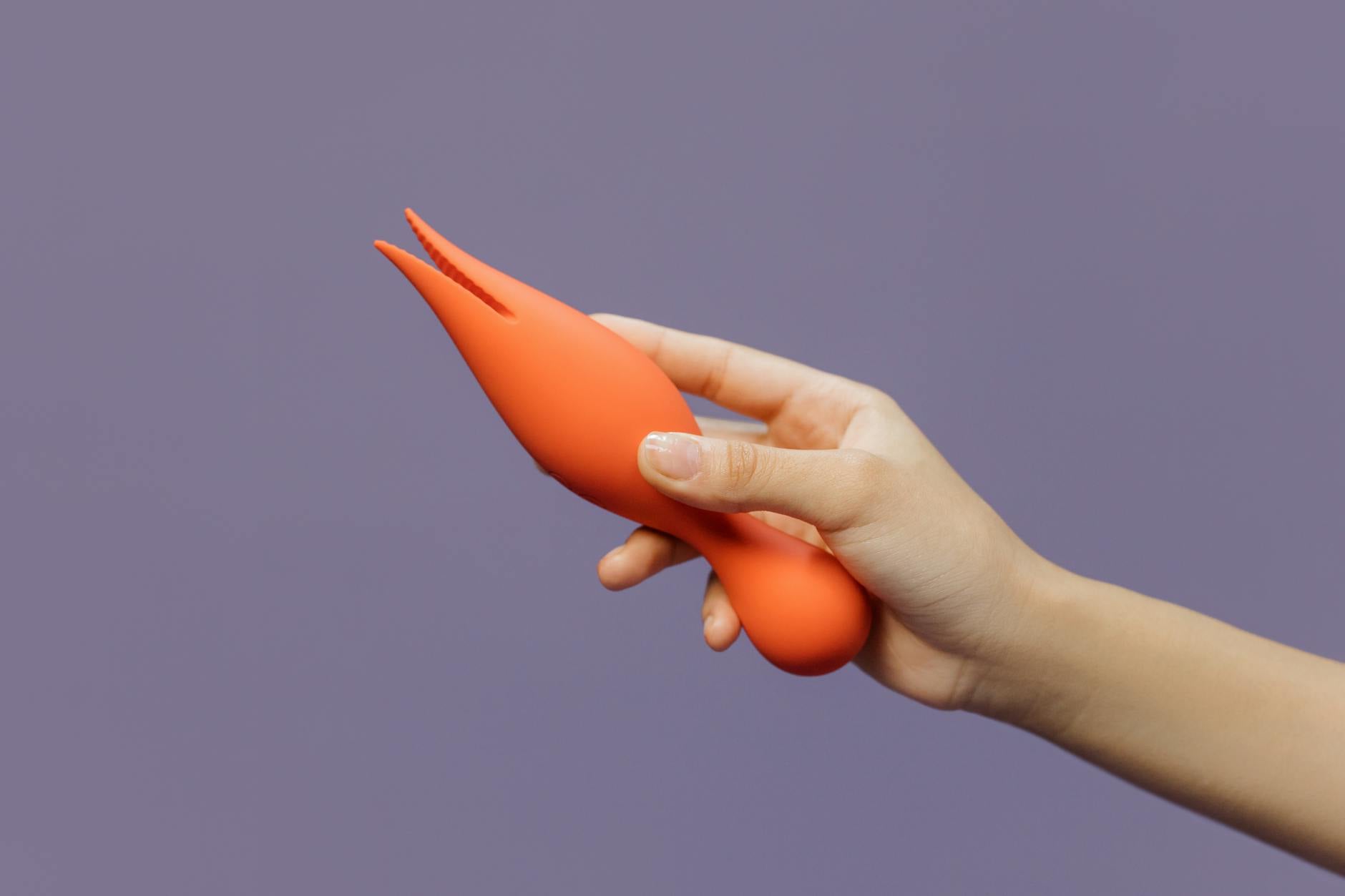
How Lemon Vibrators Restore Clitoral Sensitivity After Hormonal Changes
Here's what you probably already know
Your clitoris used to feel everything. A light touch, a change in pressure, the exact right pattern at exactly the right moment. Then something shifted. Birth control. Perimenopause. Long-term hormonal medication. Postpartum recovery. The sensation didn't disappear, but it got quieter. Things that used to feel electric now feel muted, distant, like you're experiencing pleasure through a pane of glass.
You're not broken. Your clitoris isn't broken. What's changed is how estrogen and testosterone are interacting with the nerve endings in your genital tissue. And here's the thing no one explains clearly: that's not permanent. It's changeable. And lemon clitoral vibrators work with your body's neurology in a very specific way that directly addresses this kind of sensation loss.
What hormonal changes actually do to sensation
Your clitoris has about 8,000 nerve endings. Estrogen and testosterone don't just float around your body doing vague things. They directly affect how sensitive those nerve endings are, how quickly they fire, and how strong the signal to your brain becomes.
When estrogen drops, the tissue covering the clitoris gets thinner. This sounds like bad news. It actually is and isn't. Thinner tissue can mean less padding between the nerve endings and external stimulus. But it also means the tissue is more fragile, more prone to irritation, and weirdly, sometimes less responsive to traditional vibration patterns because the nerve endings themselves are less densely packed in the outer layer.
Testosterone is the other piece. If you have ovaries, you've been producing testosterone your whole life. It drives clitoral engorgement, sensitivity, and the speed at which arousal builds. When testosterone drops (whether from birth control, age, medication, or postpartum hormonal shifts), the clitoris literally gets smaller. Blood flow to the area decreases. The engorgement that normally happens during arousal happens more slowly or incompletely. Sensation becomes harder to access.
Here's what's wild: your nerve endings are still there. They haven't died. They're just not getting the hormonal signal to fire as easily. That's the difference between nerve damage (permanent) and hormonal sensation loss (completely reversible).
Why air-suction technology works when traditional vibration doesn't
A standard vibrator moves back and forth really fast. The faster it moves, the more it stimulates. That works great when tissue is thick, well-vascularized, and hormone-responsive. When hormones have shifted, you're working with thinner tissue and less blood flow. High-frequency vibration can feel overwhelming, painful, or just numb.
Lemon vibrators use air-suction technology instead. They create a gentle pressure differential that pulls the clitoral tissue into a small chamber. This does something vibration can't: it draws blood to the area. It's not hitting the nerve endings with speed. It's drawing them toward the source of stimulation and increasing localized blood flow in real time.
This matters because sensation loss from hormonal shifts is partly a blood flow problem. When the clitoris isn't getting enough engorgement, the nerve endings aren't as close to the surface. Air-suction brings them closer. It also extends the arousal process in a way that feels less jarring when your body is taking longer to respond.
The result: people with hormone-shifted sensitivity often report that lemon clitoral vibrators feel more intense than traditional vibrators, even at lower settings. You're not fighting the tool. You're working with your body's current wiring.
How to use lemon vibrators for restored sensitivity
There's a rhythm to rebuilding sensation, and it's not just about the tool. It's about how you use it.
Start low and stay there for a while. If you've been numb, your instinct is probably to crank the intensity looking for feeling. Resist this. Lemon vibrators' patterns start subtle. Use pattern one or two for at least five to seven minutes before moving up. You're not looking for immediate sensation. You're teaching your nerve endings to wake up.
Warm up first. Hormonal changes slow arousal. Budget 15-20 minutes of foreplay, self-touch, or just thinking about what turns you on before you introduce the lemon vibrator. The more engorged tissue is when you start, the better the sensation will be.
Use it consistently, not desperately. One session a week won't rebuild sensitivity. Two to three times a week is where the real change happens. You're literally training your nervous system to respond. That takes repetition.
Lubrication matters more now. Thinner tissue needs moisture. Use water-based lubricant even if your body used to provide enough naturally. The lube reduces friction irritation and makes sensation clearer because you're not dealing with discomfort underneath.
The timeline you're actually looking at
If you're thinking it'll take a week to feel normal again, that's setting yourself up for disappointment. Hormonal-related sensation loss typically takes four to eight weeks to noticeably improve with consistent use of the right tool. Some people feel shifts within two weeks. Some take three months to feel genuinely restored.
What you'll probably notice first isn't full sensation returning. It's the sensation becoming more localized, more precise. Things that used to feel like a general buzz start to feel like distinct pressure, movement, pattern. Your brain is relearning the map of your clitoris.
Honestly, this process often reveals something else: a lot of people discover that their sensitivity doesn't just restore to baseline. It gets better than it was before, because they're paying attention in a new way. They understand their current body instead of chasing a memory of their old one.
When hormonal treatment makes a difference
Sometimes rebuilding sensation with a tool isn't enough, and that's not failure. If you're in perimenopause, your doctor might suggest estrogen therapy or testosterone therapy. If you're on birth control that's tanking your libido and sensation, switching formulations or methods can transform everything in weeks.
If you're postpartum, things often naturally improve as your hormones stabilize, usually between three and six months. Using a lemon vibrator during that window speeds up the process instead of waiting passively.
The point: the lemon vibrator isn't the only tool. It's the bridge tool. It keeps sensation alive while your hormones are shifting, and it helps you maintain what you've rebuilt. Combined with medical support if you need it, you get your responsiveness back faster.
Rebuilding is not the same as returning
Here's what I want you to know that no one says out loud: your clitoris after hormonal change isn't a broken version of your old clitoris. It's different. And different doesn't have to mean worse. People often find that when they approach this as a rebuild instead of a recovery, they end up with a fuller, more nuanced understanding of their own pleasure. You're learning a new version of your body. The lemon vibrator is the tool that makes that learning possible.
Frequently asked questions
How do I know if my sensitivity loss is from hormones or something else?
Hormonal sensation loss usually happens gradually and affects the whole clitoral area relatively evenly. It often coincides with a life event: starting new birth control, entering perimenopause, pregnancy, or beginning a new medication. If sensation loss was sudden, localized to one spot, or painful, see a gynecologist. That might be nerve-related or tissue-related and needs professional evaluation. If it's gradual and widespread, hormones are the likely culprit.
Can I use a lemon vibrator if my clitoris feels too sensitive right now?
Yes, but with modifications. Start with the lowest setting and the most gentle pattern. Some people find that using the lemon vibrator over the outer labia or clitoral hood first, rather than directly on the clitoris, lets them build tolerance while still getting the blood flow benefits. The air-suction technology is actually gentler on sensitive tissue than traditional vibration because it's not friction-based.
Will my sensitivity come back completely, or am I just adjusting to a new normal?
Most people experience meaningful improvement in sensitivity within two to three months of consistent use, especially if the sensation loss is purely hormonal. You might not return to your twenty-five-year-old clitoris's exact sensitivity, but you'll likely get back to a responsive, pleasure-capable version. And often, the new normal includes more pleasure awareness because you've had to pay attention differently.
Is it okay to use a lemon vibrator every day?
Yes. Lemon vibrators are safe for daily use. Some people use them once a week, some several times a week, some daily. There's no upper limit. You might want to skip a day if your clitoris feels irritated, but that's about listening to your body, not a rule about the tool.
What if I'm on hormonal birth control and my sensitivity is low, but I can't change it for other reasons?
A lemon vibrator becomes even more valuable in this situation. You're managing sensation loss caused by something you need to stay on. Consistent use keeps sensation alive and often gradually improves responsiveness even while you're on the medication. Some people find that combining a lemon clitoral vibrator with regular partner intimacy, or with specific times they're more likely to be responsive, helps them stay connected to pleasure even with the hormonal dampening.
Can my partner use a lemon vibrator on me if I have low sensation?
Absolutely. In fact, partner use sometimes feels more intense because another person can adjust pressure and pattern based on what they're seeing in real time. If you're rebuilding sensitivity with a partner, you might explore how to use lemon vibrators with a partner for specific conversation starters and rhythm ideas.
The bottom line
Hormonal changes dull sensation. They don't end it. Lemon vibrators work with the blood flow and nerve ending activation your shifted hormones need, not against them. Rebuilding takes time, consistency, and the right tool. You've got access to all three. Your sensitivity is still there, just waiting for the right conditions to wake up.
Ready to start? The best time is now. If you have questions or want personalized guidance on rebuilding pleasure after hormonal shifts, reach out to us.