Let's name the thing nobody wants to admit
You know exactly how to get yourself off. Alone, it's reliable. Predictable. You know the angle, the speed, the rhythm. Then your partner shows up and suddenly you're in your head, wondering if you're taking too long, if they're getting bored, if something's wrong with you. Spoiler: nothing's wrong with you. This is one of the most common experiences people report, and it has almost nothing to do with your body or your capacity for pleasure.
Why the gap between solo and partnered orgasm exists
Here's the thing about masturbation. It's you, alone, in complete control. Your nervous system isn't splitting its attention between sensation and social performance. Your brain isn't running a background calculation about whether your partner is enjoying themselves or judging how long this is taking. That mental load is massive, and it directly interferes with orgasm.
When you're with a partner, you're managing multiple things at once. Are they comfortable? Do they know what you like? Will they think you're needy if you ask for more time? These thoughts literally suppress the parasympathetic nervous system activation that orgasm requires. You can't rush into the relaxation state an orgasm needs when part of your brain is running a performance audit.
Additionally, many partners don't actually know what pattern, pressure, or rhythm works for you. Even if they do, their stamina might not match your timeline. Their hand gets tired. They get distracted. None of this is personal. It's just logistics.
What lemon clitoral vibrators actually change
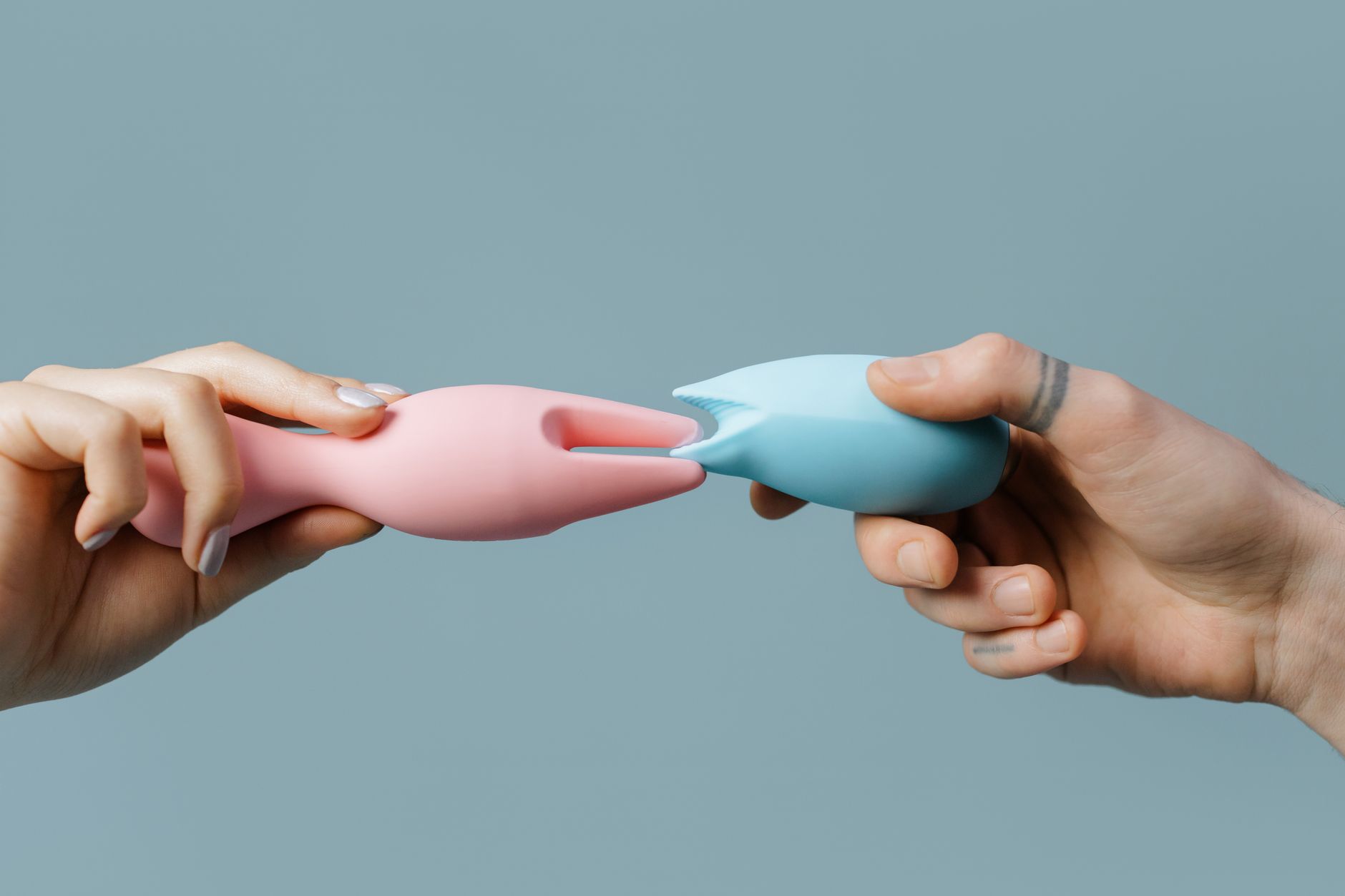
A lemon clitoral vibrator like the Lem removes several variables from that equation. First, it's consistent. It doesn't get tired. It doesn't vary the pattern mid-stroke. Second, it's yours to control. You're still driving speed and pressure, which keeps your nervous system in a place where it can actually focus on sensation.
But here's the part most people miss: the real magic happens when you use it with your partner present, not instead of them.
When you introduce a lemon vibrator into partnered play, you're actually solving two problems at once. You're removing the pressure on your partner to "make it happen" through their own effort alone, which ironically removes pressure on you to perform. Your partner can focus on other kinds of intimacy. You can focus on what actually gets you there. Everyone relaxes. And when everyone relaxes, orgasm becomes possible.
This is why so many people report that adding a clitoral vibrator doesn't make sex feel less intimate. It makes it more intimate, because both of you stop performing and start actually connecting.
The patterns that work best for partnered play
Most lemon sexual toys have multiple vibration patterns. When you're using one with a partner, the patterns that work best are usually the sustained ones. Not the ones that pulse on and off or escalate dramatically. You want steady, consistent sensation that you can relax into.
Start with a lower pattern. Patterns 1 or 2 on most lemon vibrators are your warm-up. You don't need maximum intensity right out of the gate. In fact, if you jump straight to high intensity, your body can actually become desensitized mid-session.
The suction-based design of a quality lemon clitoral vibrator means you're getting broad stimulation across the whole clitoral network, not just targeted pressure on one point. This tends to feel less intense than it actually is, which means you can stay with it longer without feeling overstimulated.
Communication is the second tool
Introducing a vibrator shouldn't be a surprise. The conversation matters more than the object.
Instead of "I want to use a toy," try "I've been thinking about what actually gets me there, and I want to try something that might help both of us feel less pressure." That reframe matters. You're not saying your partner isn't enough. You're saying this is about removing friction from the system you already have.
If your partner has anxiety about vibrators, that's worth acknowledging directly. Some people worry toys mean they're not "doing enough." They're not. You're simply using the right tool for the job. A vibrator is not competition. It's a prosthetic for sensation, nothing more. You wouldn't feel bad using lube because it helps things work better. A vibrator is in the same category.
Talk about what you'll use it for. Are you using it during foreplay? During penetration? Afterward? The timing changes how it lands emotionally and physically.
The actual mechanics when you're partnered
Let's say you're with a partner. Here's how this typically goes.
Start with plenty of foreplay. This isn't the time to rush. Your arousal needs to build naturally, which means patience. When you feel ready, introduce the lemon vibrator. Start at a low pattern. Your partner can focus on other kinds of touch. kissing, stroking your inner thigh, maintaining skin contact. The vibrator handles clitoral sensation while they handle everything else.
If you're going to have penetration, the vibrator can work alongside that. Many people find that clitoral vibration during penetration changes the sensation of the penetration itself, making it feel fuller or more intense. Experiment with angles. Some people like the vibrator in the same plane as their body. Others prefer perpendicular pressure.
The key thing: you stay in control of the vibrator. Your partner doesn't hold it. You do. This keeps you connected to your own sensation and your own pace.
Why this actually rebuilds connection
When you can finally orgasm with a partner, something shifts. The sex feels less desperate. Less like you're both trying to achieve something and failing. More like you're both actually enjoying yourself.
Many couples find that once they introduce this element, they return to partnered sex more often. It's not a chore anymore. It doesn't feel like a performance you might fail at. It feels like something you both actually want to do.
This is also why how lemon vibrators help when you feel disconnected from your body after years of numbness matters so much. Sometimes the barrier to partnered orgasm isn't psychological at all. It's sensory. Your body simply needs a different kind of input to wake up.
What doesn't work
Don't use the vibrator as a replacement for foreplay or connection. Don't turn it on and expect something to happen if the rest of the environment is still high-pressure and anxious. Don't introduce it as a "fix" for a broken person, because that's not what's happening here.
Also, if you're regularly having trouble reaching orgasm with partners, how lemon vibrators help when you're nervous about partnered pleasure might be another useful read. Sometimes the issue isn't mechanical. It's anxiety.
Avoid patterns that are too intense. You're looking for a tool that extends your capacity, not one that overrides your nervous system. Think sustainable stimulation, not maximum output.
The timeline expectation
Honestly? Many people notice a difference the first time. Your partner is less anxious because they know you're in control of your own stimulation. You're less anxious because you're not trying to force your body to respond on someone else's timeline. That's enough to crack the pattern open.
But sometimes it takes a few sessions. Your nervous system might need time to trust that this new element isn't another failure waiting to happen. If you've spent years struggling to orgasm with partners, your body's learned to brace. A vibrator alone doesn't undo years of bracing in one night.
Give it three or four sessions before you decide whether it's working. And honestly? How to use lemon vibrators when you need pleasure but worry about mess and other practical guides might help you feel more confident introducing this into your routine.
FAQ: The questions that come up
Will using a vibrator with my partner make them feel inadequate?
No. And if it does, that's worth talking about directly. Their inadequacy isn't caused by the vibrator. It's preexisting anxiety that the vibrator is just making visible. A vibrator is a tool. Using a tool doesn't mean the person holding it isn't capable. It means the person holding it wants to succeed and is smart enough to use the right equipment.
Can I use any vibrator or does it have to be a lemon clitoral vibrator?
Quality matters. A cheap vibrator might have inconsistent patterns or poor battery life, which defeats the purpose. You want something reliable enough to actually help rather than add frustration. Lemon vibrators are designed specifically for clitoral sensation, which is why they tend to work well for this purpose.
What if I can orgasm with my partner sometimes but not consistently?
That's the most common scenario. Inconsistency usually means the conditions aren't quite right each time. Stress, tiredness, whether you've had enough foreplay, where you are in your cycle. A vibrator helps standardize the clitoral input, which makes the other variables less relevant.
Should we use it every time we have sex?
No. Use it when you want to. Some people use it most of the time. Others use it occasionally, just when they want that specific sensation. This isn't a forever fix. It's a tool you deploy when it serves you.
What if my partner wants to hold the vibrator?
That's fine, but I'd suggest you do it first. Let your partner watch how you use it, where you hold it, what patterns you prefer. Then they can mirror that. Or keep the control with you. There's no rule here. Whatever feels intimate to you is the right call.
How long does it take to see results?
Many people notice a difference in one session. Your partner feels less pressure because you're literally telling your nervous system "you're in charge here." That alone can crack open some of the psychological barriers. But if you've been struggling for years, give it a few tries before deciding.